
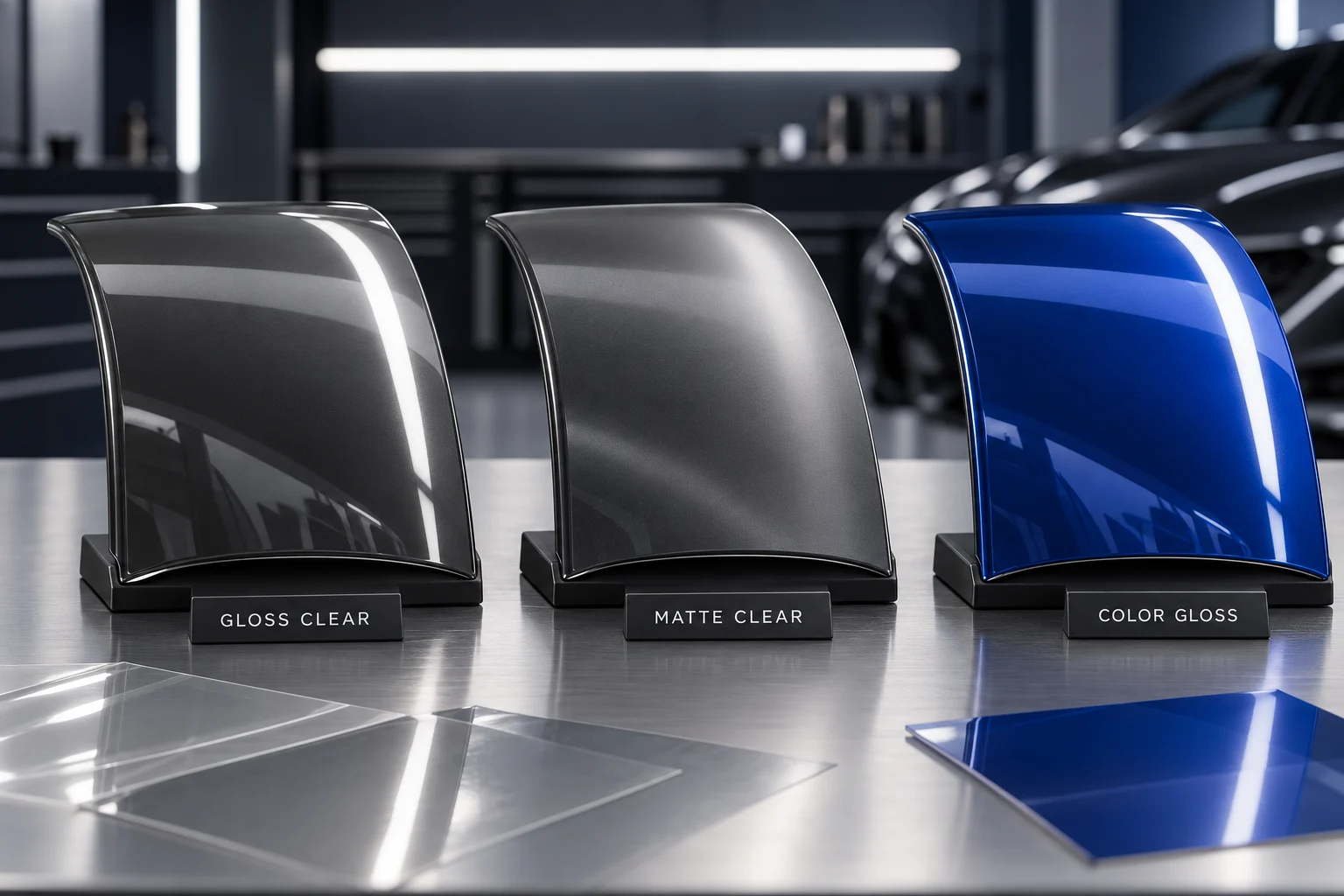
Car paint protection film adds a protective layer over the paint. Clear gloss keeps the original color visible, transparent matte changes its sheen, and color PPF gives the covered panels a different color.
Clear describes transparency; matte describes surface sheen. A film can be both clear and matte, while color PPF can have a gloss, satin or matte finish. These differences affect the finished car’s appearance and the coverage your shop needs to quote.
The CONERGIES films discussed below use TPU constructions to help protect against stone chips, light scratches and environmental contaminants. Their self-healing topcoats help light surface scratches and swirl marks recover. The finish you choose then determines what your customer sees over the paint.
Clear Gloss Paint Protection Film Keeps the Original Color
Clear gloss PPF leaves the original paint visible beneath a glossy surface. Metallic flake, pearl effects and existing panel-to-panel color differences still show through. It suits customers who want to keep their paint color and a reflective finish.
Our DiamondClear PPF is a 7.5 mil high-gloss film with flexible handling for curved panels. Its optical-grade construction minimizes visible film texture and preserves well-defined reflections.
Clear gloss can cover selected areas, such as a full hood, bumper and mirror caps, without creating an intentional color change. Film edges and differences in surface texture may still be visible. On factory matte paint, a gloss film changes the outer sheen while keeping the original color visible.
Matte Paint Protection Film Softens Reflections
Transparent matte or satin PPF keeps the paint visible while reducing the outer surface’s sheen. Reflections become softer and less sharply defined. Satin retains a gentle sheen, while a flatter matte finish looks more muted.
DiamondSatin PPF is our 7.5 mil option for a low-sheen finish. On gloss paint, it changes the reflections while leaving the underlying color visible. The same paint can appear different in brightness or depth after that change, so view an installed sample on the vehicle before approving the finish.
Satin film on a gloss hood will look different from the uncovered fenders. For an even satin appearance across the exterior, include the adjoining panels in the conversion. If the vehicle already has factory matte or satin paint, compare a sample beside the uncovered finish: DiamondSatin’s sheen may differ from the original paint, particularly on a selected-panel installation.
Color Paint Protection Film Changes the Visible Color
Color PPF combines a color change with paint protection. Both the shade and surface finish determine the final appearance. A blue film, for example, can create sharp gloss reflections or a softer satin finish.
Our ColorPPF range includes eight series. The Gloss Series offers solid colors with smooth, paint-like reflections, while the Gloss Metallic Series adds metallic sparkle and depth. The Satin/Matte Series provides softer reflections and lower-sheen finishes, and the Satin & Matte Metallic Series combines those finishes with metallic effects.
The Color Shift Series reveals different tones as lighting and viewing angles change. The Structured Textures Series introduces patterns such as carbon fiber, while the Chrome Series creates a highly reflective, mirror-like appearance. The Laser Series adds prismatic highlights that change with the light.
Our Color PPF uses color layers encapsulated between aliphatic TPU layers, with a hydrophilic, self-healing HYPEROPTICOAT top coat. This construction combines the decorative finish with paint protection, while the top coat allows light surface scratches and swirl marks to recover with heat.
A color change can make uncovered areas more noticeable, particularly when the original paint contrasts strongly with the film. Original paint may remain visible through panel gaps, around unwrapped edges and inside door jambs. Agree on these areas before quoting the job so the customer understands what will be covered. Wrapping the door jambs as well as the exterior requires additional material and installation work, which should be reflected in the quote.
Car Paint Protection Film Comparison
| Film option | Color visible after installation | Finish and visual effect | Effect of partial coverage |
| Clear gloss PPF | Original paint color | Glossy; enhances paint gloss and depth | Original color continues across panels; film edges or differences in gloss may remain visible |
| Transparent satin or matte PPF | Original paint color | Satin or matte, depending on the film | Covered areas may have a different sheen from uncovered paint |
| Gloss Series | Selected film color | Solid color with smooth, paint-like reflections | Uncovered areas retain the original paint color and finish |
| Gloss Metallic Series | Selected metallic film color | Glossy finish with metallic sparkle and depth | Uncovered areas retain the original paint color and finish |
| Satin/Matte Series | Selected film color | Soft satin sheen or muted matte finish | Uncovered areas retain the original paint color and finish |
| Satin & Matte Metallic Series | Selected metallic film color | Metallic effect with a satin or matte finish | Uncovered areas retain the original paint color and finish |
| Color Shift Series | Selected color-shifting tones | Different tones appear as lighting and viewing angles change | Uncovered areas retain the original paint appearance |
| Structured Textures Series | Selected film color and pattern | Patterns and textures, including carbon fiber effects | The pattern ends where the film coverage ends |
| Chrome Series | Selected chrome color | Highly reflective, mirror-like finish | Uncovered areas retain the original paint appearance |
| Laser Series | Selected film color with prismatic highlights | Prismatic reflections that change with lighting and viewing angle | Uncovered areas retain the original paint appearance |
For all Color PPF series, original paint may remain visible through panel gaps, around unwrapped edges and inside door jambs. Confirm these areas before quoting, as covering door jambs requires additional material and installation work.
How to Choose Paint Protection Film for Your Shop
Compare the finish on an installed sample, including a flat area and a curve. View it in daylight and under the workshop lighting used for your final inspection. Look at the color, sheen and reflected edges. A screen image or loose swatch can help narrow your choice, but it will not show the full installed result.
Mark the panels and edges included in the quote. For a front-end protection package, identify the hood, bumper, fenders and other agreed areas. For a finish conversion, note the exterior panels, wrapped returns and any jamb coverage. These details determine material use and fitting time. Price the work based on that scope and the vehicle’s condition.
Keep the product and color reference with the installation record. If a panel needs replacement later, compare the replacement film with the existing installation before fitting. Outdoor exposure may have changed the existing color or sheen, and the same nominal finish does not ensure a matching repair.
Use care products suited to the selected film. Satin and matte finishes need products that preserve their low sheen; abrasive or gloss-enhancing treatments can leave shiny patches. Our PPF maintenance guide for dealers and installers covers washing and handover advice for customers.
Car Paint Protection Film FAQs
Is Color PPF the Same as Vinyl Wrap?
No. Conventional vehicle wrap is usually a PVC film used mainly for styling. CONERGIES ColorPPF uses a TPU protective construction with encapsulated color layers, combining the color change with paint protection.
Can You Apply a Ceramic Coating to Matte PPF?
A coating formulated for satin or matte PPF may be suitable. For DiamondSatin, confirm compatibility with CONERGIES and the coating manufacturer, then test it on a sample to check the effect on sheen.
Can Matte PPF Be Polished?
Avoid abrasive polishing on DiamondSatin. Cutting compounds and gloss-enhancing waxes or sealants can create shiny patches and an uneven finish. Use cleaning products suitable for satin or matte PPF.