
The main difference between aliphatic and aromatic paint protection film is how the TPU base responds to sunlight. Aliphatic TPU resists UV-induced yellowing, making it well suited to clear exterior protection. Aromatic TPU is more susceptible to this color change, even when it looks clear when new.
For dealers and installers, that distinction matters because clear PPF needs to preserve the appearance of the paint as well as protect it. Yellowing can be particularly noticeable on white and light-colored vehicles.
What Is Aliphatic PPF
Aliphatic PPF uses thermoplastic polyurethane made with aliphatic diisocyanates. These are chemical building blocks that influence how the material behaves under UV exposure.
Aliphatic TPU is used in applications where transparency and outdoor color stability are important. In clear PPF, it helps the film retain its clarity so the original paint remains visible. The finished film’s performance also depends on its formulation, top coat and adhesive.
What Is Aromatic PPF
Aromatic PPF uses a TPU base made with aromatic diisocyanates. Aromatic TPU can offer toughness, flexibility and abrasion resistance, and certain grades are highly transparent when new.
Its main limitation for clear exterior protection is yellowing under UV exposure. As explained in Covestro’s guide to TPU optical properties, UV light causes color-forming changes in aromatic TPU. UV stabilizers can delay this process but do not eliminate it.
A fresh sample therefore cannot demonstrate long-term color stability. Yellowing also does not, by itself, establish how much strength a film has lost. Appearance and mechanical performance need to be assessed separately.
Aliphatic and Aromatic PPF Compared
| Property | Aliphatic TPU base | Aromatic TPU base |
|---|---|---|
| Chemistry | Made with aliphatic diisocyanates | Made with aromatic diisocyanates |
| Initial appearance | Transparent grades are available | Transparent grades are available |
| UV-related yellowing | Resists the characteristic yellowing of aromatic TPU | Prone to yellowing; UV stabilizers can delay it |
| Clear exterior use | Well suited where color stability is important | Yellowing is a limitation for appearance |
| Impact protection | Depends on the finished film and its construction | Depends on the finished film and its construction |
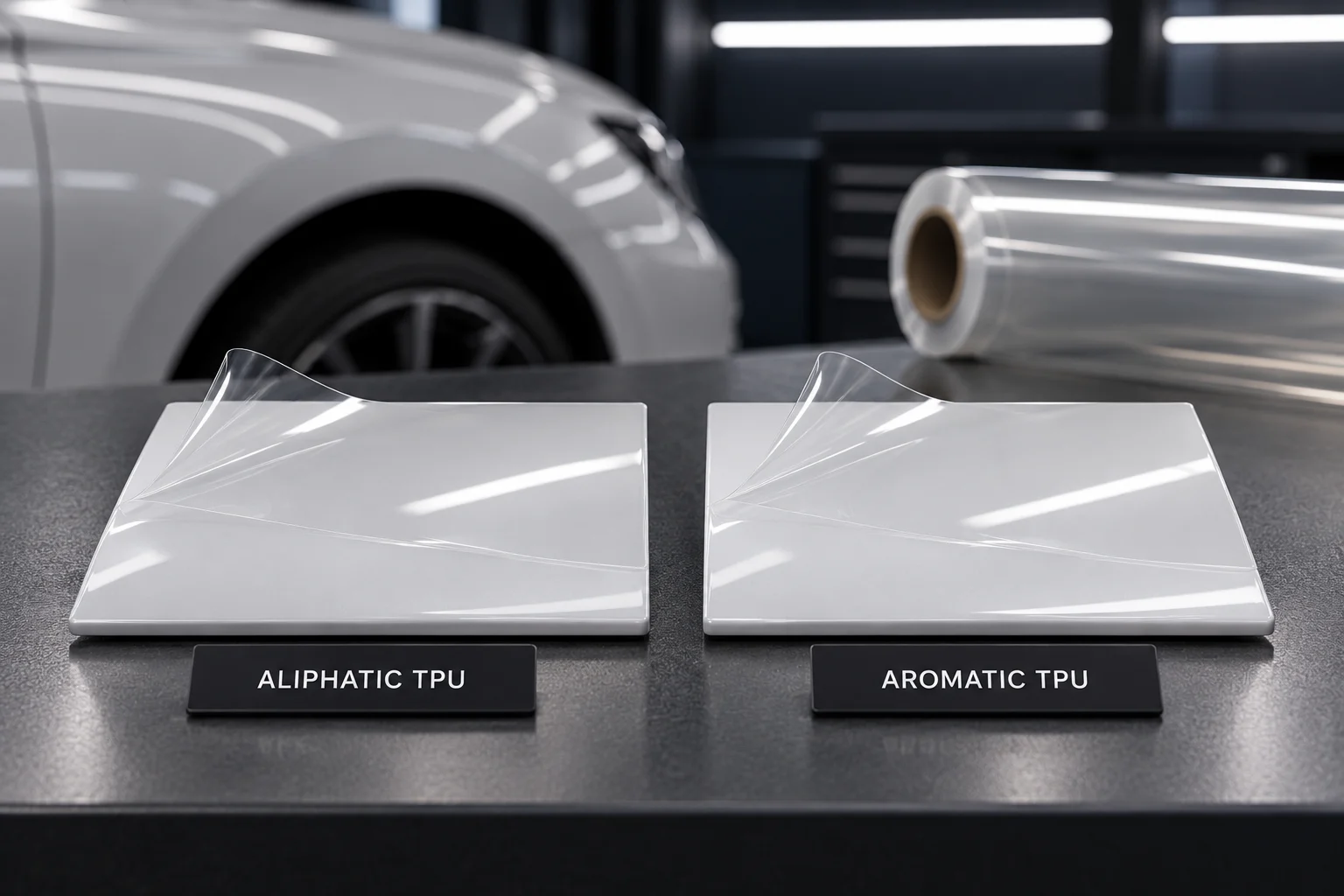
Aliphatic TPU Across the CONERGIES PPF Range
All CONERGIES paint protection films use aliphatic TPU. Our DiamondClear and DiamondClear Hydro are two clear gloss options in the range. Both are 7.5 mil films designed for everyday paint protection and flexible handling around curved panels. They enhance paint gloss and depth while keeping visible film texture to a minimum.
Both feature self-healing CRYSTALIX top coats that allow light surface scratches and swirl marks to recover with heat. DiamondClear has a hydrophilic surface that encourages water to spread, while DiamondClear Hydro has a hydrophobic surface that promotes water beading.
The aliphatic TPU base supports color stability. The top coat determines the surface’s water behavior and light-scratch recovery. Self-healing applies to superficial marks in the top coat; it does not reverse discoloration or repair deep cuts.
How to Choose Aliphatic PPF for Your Shop
Start by confirming the TPU chemistry in the manufacturer’s technical information. Then compare the finished products. The word aliphatic alone does not establish impact resistance, installation quality or service life.
Install samples on comparable painted surfaces and inspect them under the same lighting. Check reflection clarity, surface texture and the appearance around curves. This shows how the film looks after fitting; long-term color stability requires separate weathering data. When reviewing test results, check the method, exposure conditions and measured change rather than relying on the test duration alone.
Choose thickness to suit the vehicle and the work your shop handles. Our PPF thickness guide compares 7.5, 8.5 and 9.5 mil options. Thickness adds protective material, but formulation and construction also matter when assessing performance.
During a trial installation, assess repositioning, squeegee response and edge finishing. Follow the product’s installation instructions and check how it conforms around curves without excessive tension. Include any additional finishing time in the quote.
Common Questions About Aliphatic PPF
Does an Anti Yellowing Claim Confirm Aliphatic TPU
No. Anti-yellowing describes a performance claim, while aliphatic identifies the chemistry. Aromatic TPU can also contain UV stabilizers. Ask for confirmation of the base material and supporting test information for the finished film.
Can Aliphatic PPF Still Become Discolored
Yes. Resistance to UV-induced yellowing does not make the entire film immune to staining or chemical damage. Contamination and unsuitable cleaning products can affect its appearance. Follow the film’s care instructions and have persistent discoloration assessed by the installer.
Does Aliphatic PPF Guarantee Residue Free Removal
No. The term describes the TPU base, not the adhesive’s release behavior. Follow the selected film’s removal instructions and assess the paint condition before removal. Any remaining adhesive should be treated using an approved method.