
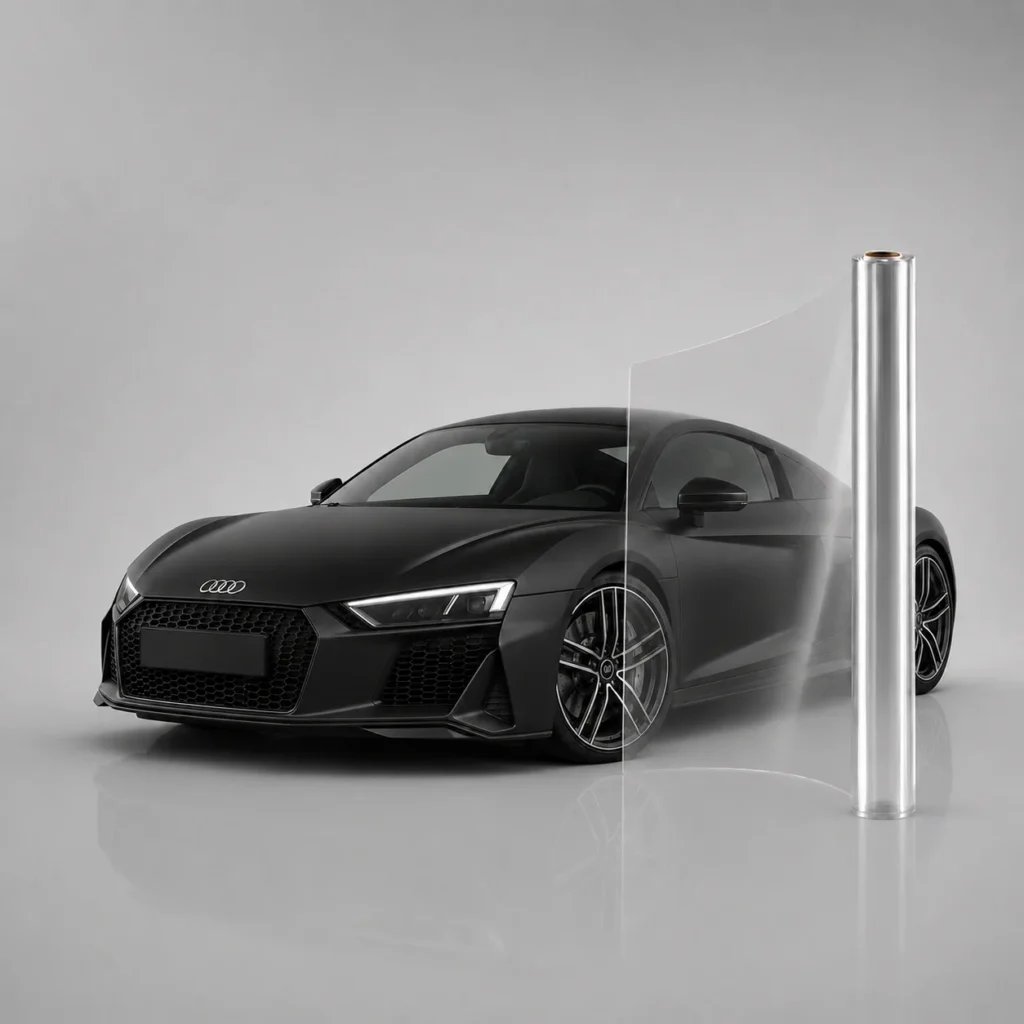
Show an installed satin PPF sample beside the customer’s paint before quoting. If they want satin on selected areas of a gloss vehicle, use complete panel boundaries where practical and show them which neighboring panels will stay glossy. If they want a continuous satin look, price the visible painted exterior and identify any trim, returns and jambs separately.
Our DiamondSatin clear PPF is a 7.5 mil film that softens reflections while keeping the original paint visible. That change can make the same color look brighter or deeper under different lighting. The finish your customer approves and the point where it stops will determine the scope of the job.
Show Satin PPF on the Customer’s Paint
Use a demonstration panel with DiamondSatin installed over paint close to the vehicle’s color and finish. Leave part of the panel exposed so the customer can compare both surfaces under the same light. Point to the edge of a reflected light on each half. BYK-Gardner’s gloss measurement guide distinguishes how bright a reflected image appears from how sharply you can see its outline. Both are useful when a customer is deciding how much sheen they want.
Hold the sample at a similar angle to the panel you are quoting. Look at it under a workshop light and again in daylight, then step back to the distance from which the customer usually sees the car. Walk from the front corner toward the side so they can judge the hood and fender together. A flat hood and a curved fender catch different highlights, even when both use the same film.
On metallic or pearlescent paint, follow the shimmer as you change the viewing angle. NIST coatings research shows how these pigments respond to the direction of the light and the observer. Show the customer how that change looks beside the broad, softer reflections they are considering for the vehicle.
If the customer points out a bright patch on the fender, move the sample until it follows that part of the panel, then compare both halves again. Seeing the covered and exposed paint at the same angle helps the customer decide whether they like the change in sheen. This is especially useful when the quoted panel sits next to one that will remain uncovered.
Compare Factory Satin and Matte in Person
A demonstration panel in a similar color can show what the film does to a reflection. When the customer wants a close match to factory satin or matte paint, hold the installed sample beside the exact area that will stay exposed. A front bumper and the original satin fender beside it may show different levels of sheen. Look at that junction in daylight and under the shop lights before the customer approves selected-panel coverage.
Keep a record of the sample and lighting you reviewed together. A photograph with both surfaces in the same frame helps the fitter identify what was discussed. Make the finish decision at the vehicle, where the customer can move around the sample and see how it changes.
Choose Where the Satin Finish Will Stop
Show each coverage option from the angle where its finish boundary will be most visible. On a gloss car, adding a panel moves the contrast to the next uncovered area. Use the options below to explain what the customer gains by changing the scope.
| Coverage option | Where the sheen changes | When to quote it |
|---|---|---|
| Partial hood | Across the hood at the film edge | The customer wants limited coverage and accepts a line across the panel. |
| Full hood and bumper | At the boundaries with the uncovered fenders | The customer wants a continuous finish across the hood and accepts gloss fenders. |
| Front end through the fenders | At the front door gaps and any excluded trim | The customer wants the main front panels to read as one satin area. |
| Visible painted exterior | At any retained gloss accents and where coverage ends around openings | The customer wants a continuous satin look on the main painted surfaces. |
For example, if the customer likes the bumper and hood in satin but notices a sharper reflection on the fender, show the full front-end option from the same front corner. Then walk down the side and point out where satin fenders would meet gloss doors. Price the extra panels separately so they can judge whether moving that transition is worth the change in scope.
Mark the proposed stopping points on a photo taken from that front corner. For a partial hood, draw the line across the panel so the customer can see where the reflection will change. For a full front end, show the door gaps in a second photo if they sit outside that view. Use those images when the customer chooses between estimates.
Define the Coverage Before You Quote
Agree on Faces, Returns and Trim
For an exterior conversion, walk around the vehicle with the doors and tailgate closed. Agree which visible painted faces are covered and identify any gloss accents the customer wants to keep. Then open the doors and tailgate and review the painted surfaces inside the openings. A tailgate quote might include the outer face, leave the inward-facing return exposed and retain a glossy trim insert. Mark those boundaries on a photo that the customer and fitter can use.
Ask the fitter to review access before committing to a wrapped edge or seam location. A customer may want the film carried around the edge of a panel that needs a closer inspection. Identify the agreed stopping point and include any trim work in the quote. If the fitter finds that the proposed edge treatment needs to change, show the customer where the film would end and agree on that change before fitting the panel.
Assess Paint Condition at Intake
Look for chips, scratches and signs of previous work on the panels in the quote. Ask about known repainting and record the affected areas with the estimate. If the shop needs to examine a repaired bumper more closely, make that part of the quote conditional on inspection. Give the fitter the approved sample as a finish reference and include the paint observations on the same work order as the coverage.
Explain Satin PPF Care at Handover
Show the customer which panels have DiamondSatin and recommend a cleaner suitable for satin or matte PPF. Gloss-enhancing waxes, cutting compounds and abrasive polishing can leave an uneven sheen. Ask them to remove insect residue and bird droppings promptly using the appropriate care method.
For exposed factory paint, use the vehicle maker’s instructions. Mercedes-Benz’s factory matte care guidance, for example, warns that polishing or rubbing hard with unsuitable materials can make its matte paint shiny. On a car with both film and exposed paint, give the customer a short care note identifying each surface. If the front is satin and the rear stays gloss, show the person who washes the car where to stop using their gloss-enhancing products.
Keep the agreed coverage photo, film name and installation date with the job. If the vehicle returns after a bumper repair, that record shows what was covered before the repair. Compare the current paint and adjoining finish before you quote new film. The original scope gives the shop a starting point for the assessment.
If you are quoting a mixed-finish front end or a full exterior, ask us about a DiamondSatin sample. Share the vehicle’s paint finish, the panels in the quote and the junction you want to show the customer.
Satin PPF Package FAQ
Does satin PPF change the paint color?
DiamondSatin leaves the original paint visible. The softer reflections can change how bright or deep the same color looks under different lighting.
Can I use satin PPF on just the front end?
Yes. The covered panels will have a different sheen from uncovered gloss paint. Agree on the transition at the hood, fenders and doors before fitting.
Will DiamondSatin match factory satin paint?
It can look different from the factory finish. Compare a sample beside the uncovered paint before approving the package.
What should I use to wash DiamondSatin?
Use a cleaner suitable for satin or matte PPF. Choose a wash without gloss-enhancing additives to preserve the low-sheen appearance.