
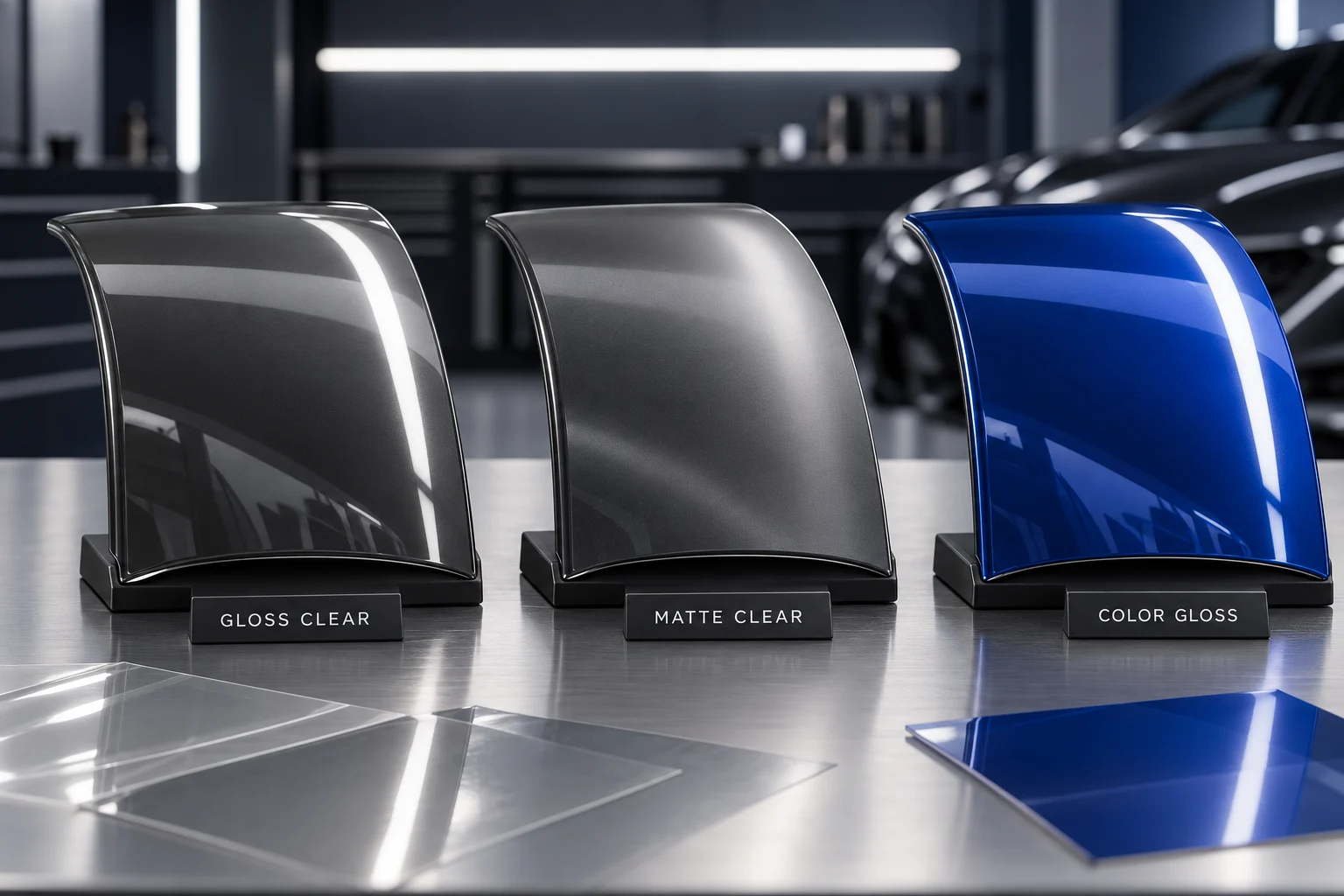
Yes, you can wax some gloss paint protection films. Use a non-abrasive wax only if the care instructions for the installed film allow it and the wax maker confirms it suits that finish. Skip ordinary gloss-enhancing wax on satin or matte PPF. If you cannot identify the film, leave the wax off until the installer can verify what is on the car.
Ask why the customer wants wax. A customer looking for a fresh finish, an owner worried that water no longer beads, and a detailer trying to remove a mark are asking for three different services. Identifying the goal makes it easier to decide whether to offer an approved wax, suggest a film-specific maintenance product, or inspect the panel first.
Which PPF Finishes Can You Wax?
Gloss PPF
Start with the installation record or product name. A shiny hood may be covered in clear gloss film or gloss color film, and products that look similar can have different topcoats. A wax the shop uses on painted panels or on another film may have different instructions for the material in front of you. If you have a written recommendation for the installed film, match it to the current product label and application directions before accepting the job.
Our DiamondClear Hydro, for example, has water repellency built into its gloss topcoat. It needs no additional ceramic coating to bead water. If the owner wants the surface to behave as it did at delivery, inspect it after ordinary cleaning and drying before proposing a topper. How water moves across a clean panel is easier to interpret once you know how the original film was designed to behave.
Satin and Matte PPF
With a low-sheen film such as DiamondSatin, aim to keep the reflections even across the panel. A product designed to boost gloss can leave patches that stand out under a shop light or in daylight. Ford’s GT owner’s manual also excludes its factory matte paint from waxing. That matters on a partially covered car with exposed matte paint. For the film-covered sections, follow the exact film’s care instructions.
| What is on the vehicle? | How to handle the wax request |
|---|---|
| Identified gloss PPF in sound condition | Offer wax as an optional finish treatment if the film and wax instructions both support it. |
| Satin or matte PPF | Skip gloss wax. Use a PPF care product only if its maker specifies low-sheen film and the treatment is permitted for the installed product. |
| PPF next to exposed paint or trim | Treat each surface according to its own guidance. Work up to the film edge with the product approved for that side. |
| Unidentified film, a new installation, or an edge that is lifting | Hold the treatment until you can identify the film, confirm the aftercare interval, or have the edge assessed. |
How to Choose a Wax for PPF
Read What the Product Is Designed to Do
Start with the directions for use. Look for explicit approval for paint protection film and any restrictions on finish, application, or existing coatings. A label that says “safe for clear coat” refers to a painted surface. Confirm PPF separately. Spray, paste and liquid describe the format. A name such as “ceramic wax” also leaves you to establish what the product is meant to do on your film.
Set aside cleaner waxes that contain abrasives and products intended to cut, compound or correct the finish. A product that removes fine marks from paint by abrasion is a poor choice for routine waxing over film. Avoid dyed waxes for this job and check the film’s instructions before using products with strong solvents. If a cleaner wax makes broad claims without saying whether it polishes by abrasion, ask the maker or choose a product whose instructions address PPF directly.
When you have the safety data sheet, the recommended uses and restrictions can help you spot a reason to stop. OSHA’s SDS requirements explain what those sheets disclose, including specified hazardous ingredients for mixtures. Ask the supplier for the directions or a written compatibility statement for your exact film when the safety sheet and label leave the application unclear.
When a distributor supplies more than one finish to a shop, it helps to record which care product goes with each film on the handover sheet. Write the full name so the customer can distinguish it from a cleaner wax sold in similar packaging. If a detailer takes over maintenance, have them check that the film and the product on the work order still match the handover. This is particularly useful on vehicles with later panel replacements or accent pieces in a different finish.
Compare the Finish Before Treating a Panel
If the product is approved, use a spare sample of the exact film installed on a test panel when possible. Follow the product’s directions and compare the treated and untreated areas once the product is ready for inspection. Keep the lighting and viewing angle consistent as you move between the two areas. NIST’s gloss measurement guidance describes why reflection geometry matters. In the shop, a straight-on look and a view from a shallow angle can reveal different streaks or patches. Keep the sample as a visual reference for the customer if you later agree to do the job.
When to Skip Wax or Use a PPF Care Product
If the owner is happy with how the film looks and cleans, routine care may be all the vehicle needs. Direct customers to our PPF maintenance guide for washing and drying. If the request is about a recurring cleaning problem, ask what keeps coming back after a normal wash. Consider a maintenance spray, sealant or ceramic coating only after identifying that need and confirming compatibility with the existing finish and any product already on it.
On a freshly fitted vehicle, follow the installer’s aftercare instructions and confirm when optional treatments can begin. A waiting period for a first wash applies to that activity. The Model 3 kit instructions, for example, set a post-installation interval before washing that particular kit. Ask for the wax timing for the film on the vehicle before using an unrelated wash interval to book a detail.
If a customer sees a pale line at a seam after waxing, ask which product was used and when the line appeared. Product residue can collect against an exposed edge. With the edge still secure, follow the film’s approved cleaning directions and use a soft, clean cloth. A line that persists or an edge that has started lifting needs installer attention before any more product goes on. Keep the bottle or product name on file. Our Warranty and Care terms exclude issues resulting from incompatible maintenance products.
Choosing a wax or maintenance spray for a CONERGIES installation? Ask our film team about compatibility and send the film name, finish, installation date and the exact product you want to use.
Waxing Paint Protection Film FAQs
Can You Use Spray Wax or Wash-and-Wax Shampoo on PPF?
Use either only when it is compatible with the installed film and finish. For satin or matte PPF, check that the instructions expressly cover low-sheen film. A plain shampoo approved for your film is the simpler default when compatibility is unclear.
How Soon Can You Wax PPF After Installation?
Ask the installer for the timing specified for the exact film and proposed treatment. Wait until the installer confirms both that the film is ready and that the product is suitable.
Can You Wax a Car With PPF on Only the Front?
Yes, if the products used are approved for the surfaces they touch. Treat exposed paint and film-covered panels separately when their care instructions differ. Use light pressure near a secure film edge and avoid leaving wax along the seam.
How Often Should You Wax PPF?
Follow the installed film’s care instructions. Where waxing is optional, there is no reason to add it to every maintenance visit. If the film and wax makers specify different conditions for a repeat application, confirm the interval before putting it on a service schedule.