When choosing paint protection film (PPF), attention often goes to TPU quality, thickness, gloss, self healing, and surface coatings. Another factor that directly affects installation is adhesive tack.
Tack influences how readily the film grips the vehicle surface, how easily it can be repositioned, and how it holds in place during application. Understanding this behavior helps professional installers select a film that suits their working methods and application requirements.
What Is Tack?
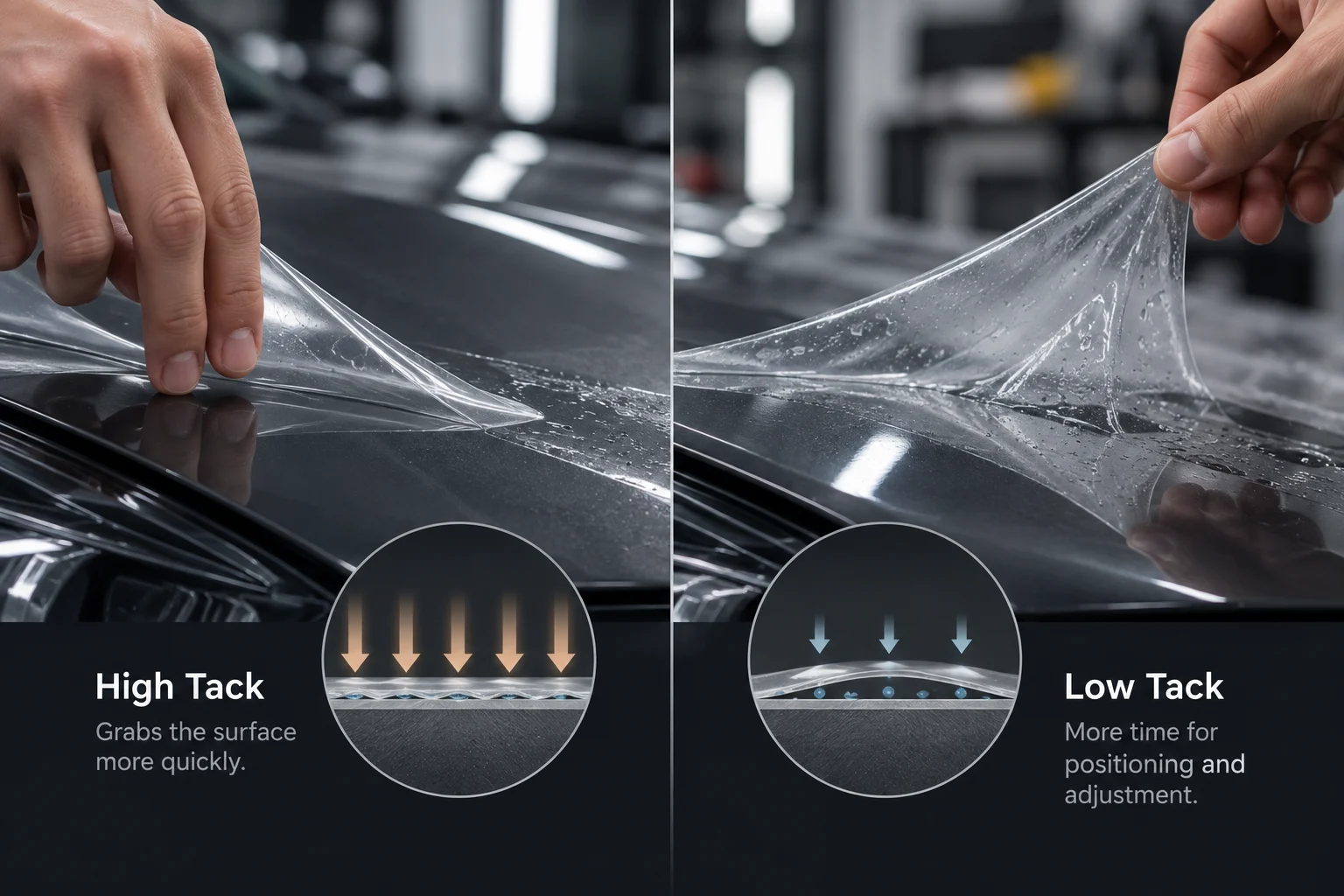
Tack is an adhesive’s ability to form an initial bond with a surface after brief contact under light pressure. In practical terms, it describes the film’s initial grab.
Under comparable conditions, higher tack provides a stronger initial grip, while lower tack generally allows easier positioning and adjustment.
Initial tack and final adhesion are separate characteristics. The way a film feels during positioning does not, by itself, indicate how securely it will bond after installation.
High Tack PPF
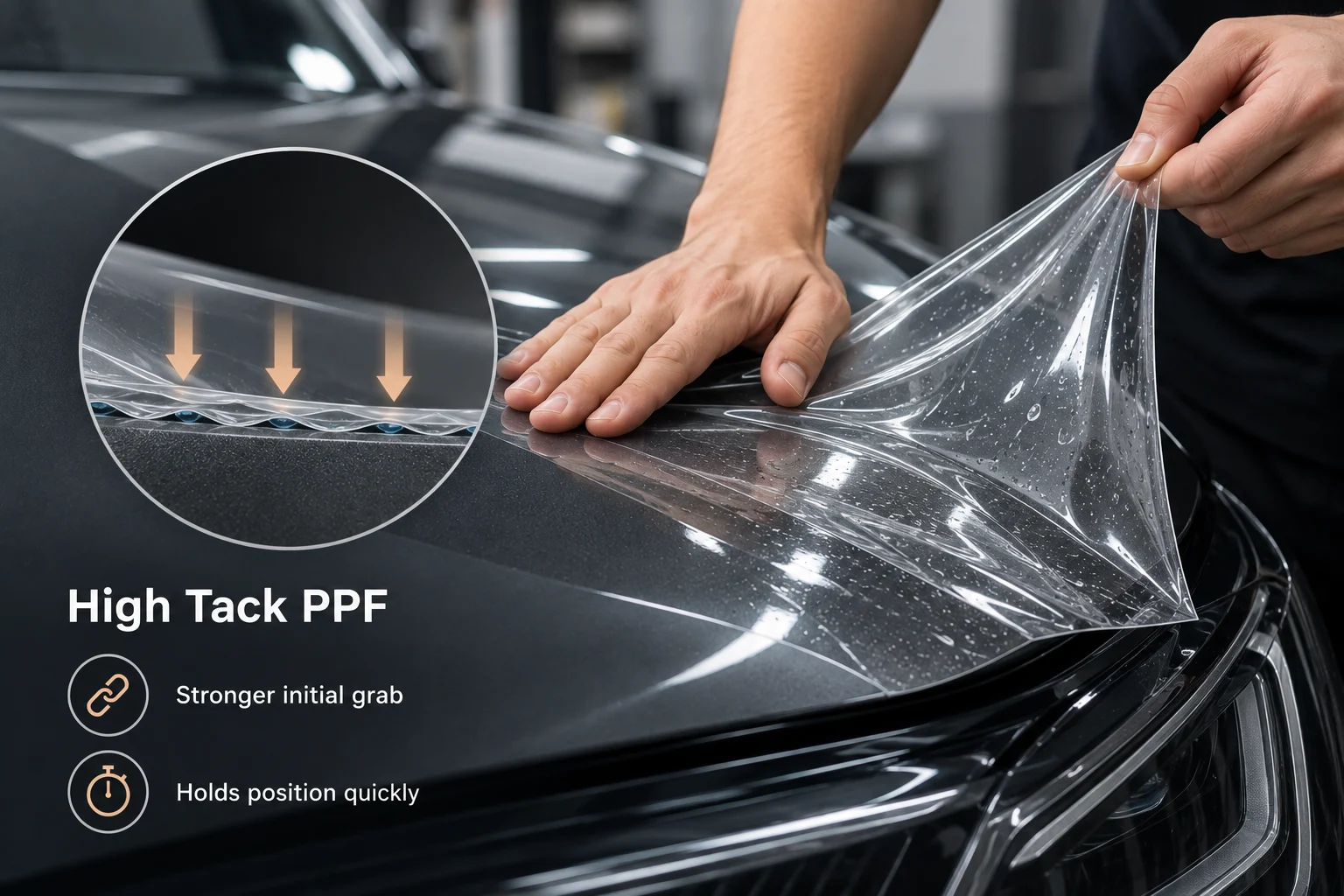
High tack PPF provides a stronger initial grip once the adhesive makes contact with the prepared surface.
This can help installers establish anchor points and keep a section of film in position while working on adjacent areas. It can suit installers who prefer a more immediate hold during application.
Stronger initial grab can also make repositioning more demanding. Once contact is established, lifting and adjusting the film may require more care. Controlled placement and the correct installation technique remain essential.
Low Tack PPF
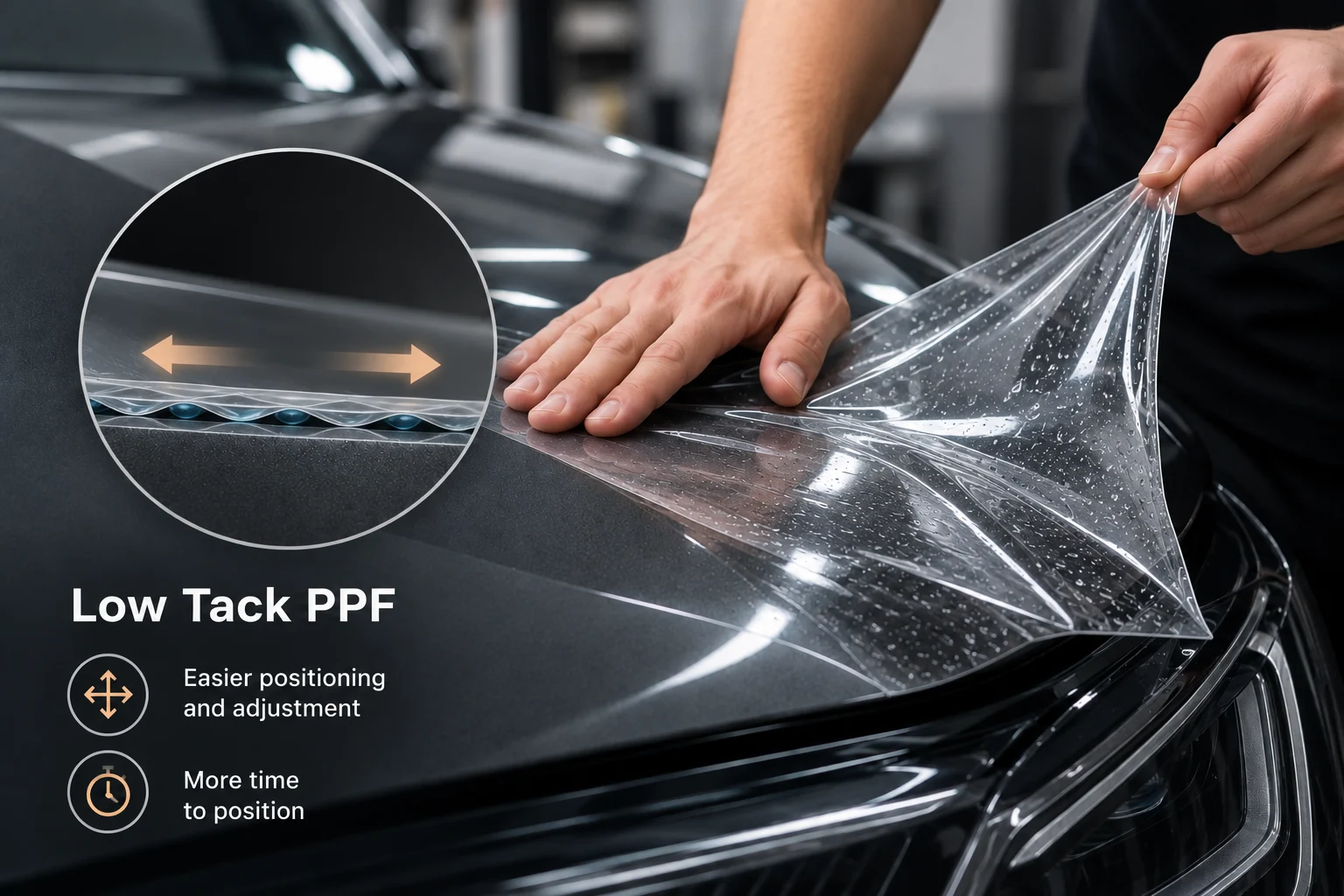
Low tack PPF provides a lighter initial grip, generally making the film easier to position and adjust during application.
This can be useful on large panels or areas where precise alignment requires several adjustments. The reduced initial grab gives installers greater flexibility while placing the film.
Lower initial tack does not necessarily mean weaker final adhesion. An adhesive can be formulated to allow repositioning during installation while developing a secure bond afterward. Final adhesion depends on the adhesive formulation, surface preparation, application technique, and time after installation.
What Else Affects Installation?
The adhesive formulation is only part of the installation experience.
During wet application, the slip solution helps the film move across the panel before it is secured. Its composition and concentration, the panel temperature, surface cleanliness, and squeegee technique all affect how the film behaves.
These factors can change how readily the same film grips the surface. For a useful comparison, evaluate films under similar conditions and follow the installation instructions for each product.
Choosing the Right PPF
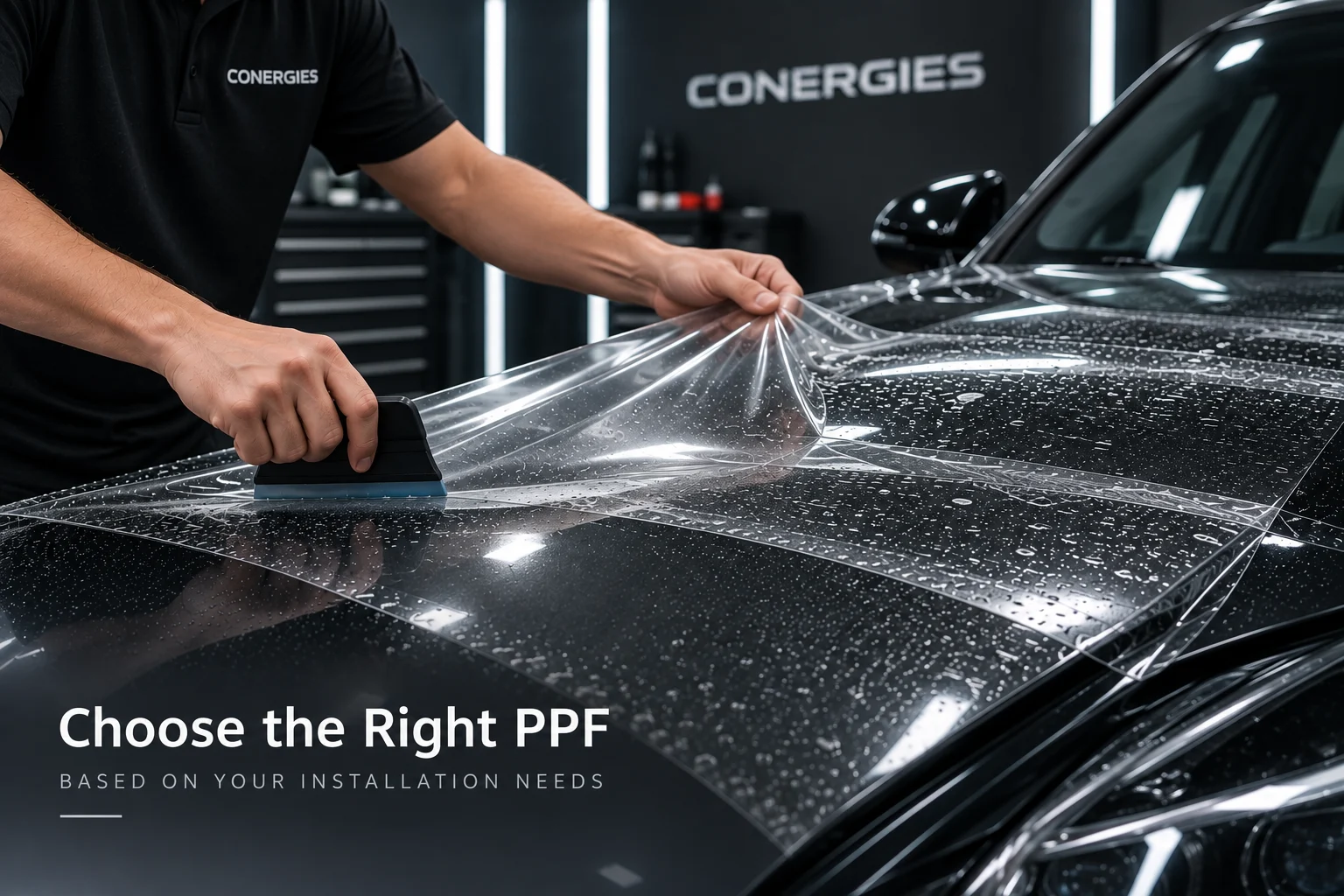
The choice between high tack and low tack depends on the balance of positioning flexibility and initial grip an installer prefers.
Consider the panels being covered, the film’s flexibility, the installation conditions, and the manufacturer’s recommended application method. Tack should be assessed alongside the TPU, topcoat, overall film construction, and documented performance.
Trying a sample under your normal working conditions can help you assess alignment, repositioning, anchoring, and edge finishing before selecting a product.
CONERGIES Offers Both High Tack and Low Tack PPF
CONERGIES offers both high tack and low tack PPF options to support different installation preferences and application requirements.
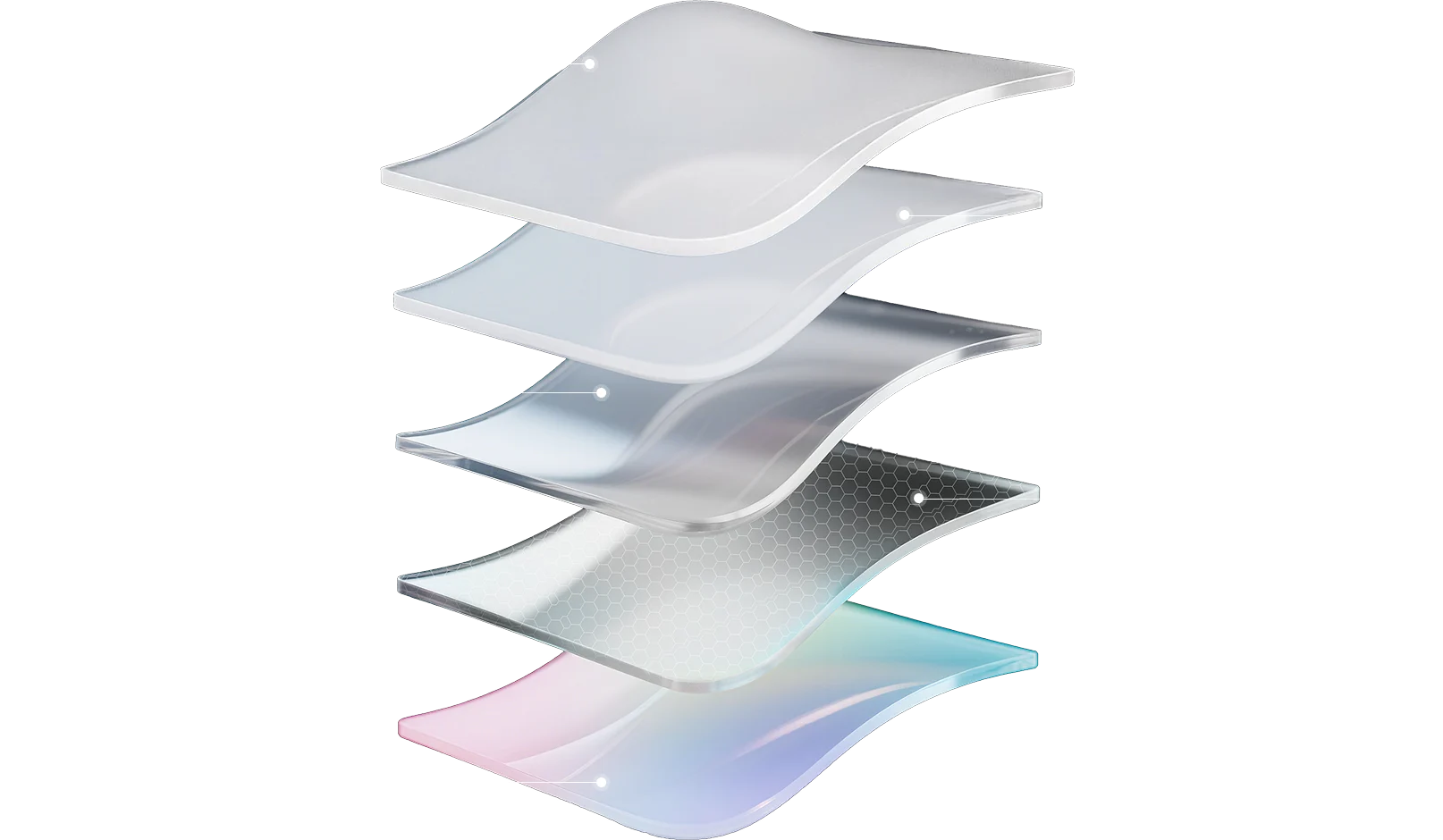
Our approach considers the film as a complete system, with the TPU, adhesive, and topcoat working together to deliver the intended handling and performance.
Contact the CONERGIES team to discuss the available options and identify a film suited to your installation needs.