
Self-healing PPF can reduce light surface scratches and swirl marks in its topcoat. It cannot rebuild torn film, fill a puncture, or repair the paint underneath. Replace damaged film when a cut or loss of material has compromised its protective coverage, or when deterioration leaves it unable to remain serviceable.
For a dealer or installer, the useful question is what kind of damage the customer has brought back. A faint wash mark, a stone strike and a lifting edge need different responses. Inspect the film before promising that heat will remove the problem or quoting a replacement.
What Self-Healing PPF Can Fix
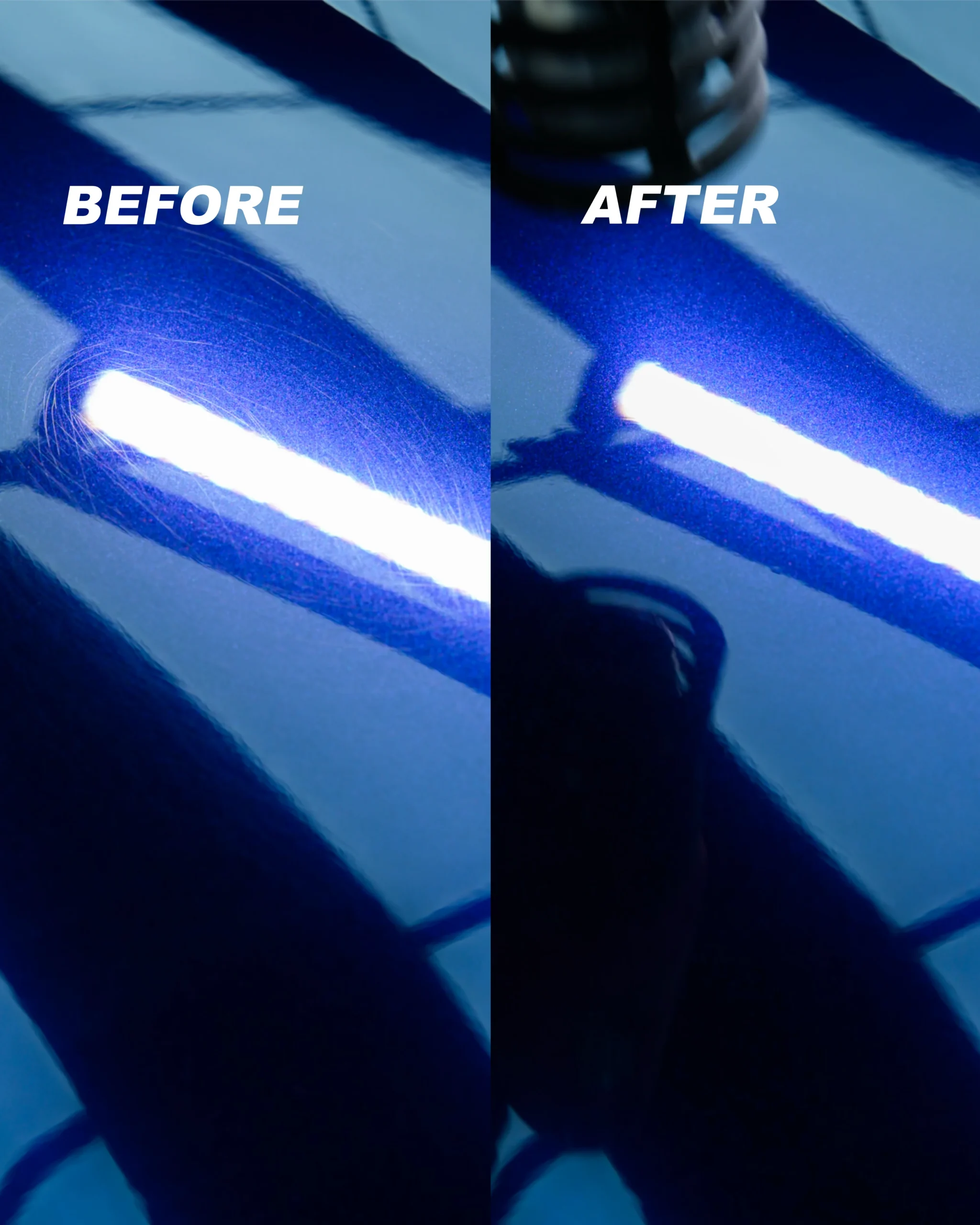
Fine swirls and light scuffs can leave shallow marks in a film’s flexible topcoat. Where the coating remains capable of recovery, heat allows the surface to relax and the marks to become less visible. The result depends on the film, the damage and the conditions.
Our explanation of how PPF self-healing technology works covers the material behavior in more detail. During a service visit, the key distinction to explain is that surface recovery does not replace material that has been cut away.
A mark can look dramatic under a sharp inspection light without penetrating the film. Equally, a small impact can leave a hole that matters more than its size suggests. Judge the condition of the film as well as the appearance of the mark.
An intact, well-bonded film does not automatically need replacing because a minor cosmetic mark remains. Discuss whether the customer accepts the appearance after appropriate cleaning and assessment. Avoid presenting every visible scratch as proof that the whole panel has lost protection.
Inspecting Marks on Self-Healing PPF
Start with a clean, dry surface. Dirt or transferred material can obscure the mark and make a surface deposit look like damage. Use the cleaning method approved for the installed film, then inspect it under consistent lighting from more than one angle.
Look for an open cut, missing material, a raised flap or separation at an edge. These observations help you decide whether a surface-recovery assessment is appropriate. A photograph alone may not reveal which layer is affected, so avoid confirming scratch depth from an image sent by a customer.
For an apparently superficial mark, follow the exact product’s recovery guidance. Compare its appearance before and after under the same light. If it remains, reassess the damage instead of repeatedly increasing heat. A remaining mark could be deeper damage or a different surface problem; it does not establish the cause by itself.
The following distinctions help organize the service decision.
| Film condition | What self-healing can address | Appropriate response |
|---|---|---|
| Fine swirls with no visible break | Superficial topcoat marks may recover | Assess under the film’s approved conditions |
| Surface deposit or transferred material | Recovery does not remove contamination | Clean using the approved care method, then inspect |
| Open cut, puncture or missing film | Recovery cannot rebuild the damaged barrier | Plan replacement of the affected film section |
| Lifted edge with trapped dirt | Recovery does not restore adhesive contact | Inspect the edge and decide whether refitting is viable |
| Persistent cracking or layer separation | Surface recovery cannot reverse structural deterioration | Assess the extent and arrange replacement where needed |
When Self-Healing PPF Needs Replacing
A cut or puncture that breaches the film leaves an interruption in the protective covering. A deep gouge with material missing also falls outside normal surface recovery. Even if the surrounding scuff becomes less visible, assess the opening separately. Improved appearance does not confirm that a damaged barrier has been restored.
Check impact damage at the paint as well. The film may have taken the contact without the paint being affected, or the impact may have reached both. You may need to remove the damaged piece before confirming the paint’s condition. Do not promise an undamaged finish beneath a stone strike before inspecting it.
Edge lifting needs a different assessment. A recently disturbed, clean edge may be suitable for professional correction, depending on the film and the cause. A contaminated or damaged edge that cannot bond reliably may require replacement. Simply pressing it down can leave the original problem unresolved. Keep pressure-washer jets away from loose edges while arranging service.
Widespread cracking, persistent layer separation or deterioration across several areas calls for a broader inspection. Establish which panels remain serviceable instead of treating the problem as a collection of scratches. Discoloration should also be assessed after suitable cleaning; its appearance alone does not establish the condition of every film layer.
Explain the repair cost separately from warranty eligibility. Our Warranty and Care terms distinguish qualifying manufacturing defects from road hazards and normal wear. Needing new film does not automatically mean a warranty claim will be approved.
Replacing a Damaged Panel of Self-Healing PPF
Damage to one bumper or hood does not automatically require removing the film from the whole vehicle. Define the affected installed piece and inspect the neighboring coverage. If the remaining film is sound, a replacement can usually be planned around that panel or existing section.
Professional removal gives you the opportunity to examine the paint and prepare it for new film. Repainted areas or an uncertain paint history deserve particular attention before removal. If the impact also damaged the paint, explain any required paint repair before installing the replacement.
Use the original film product where available and compare the replacement with the adjoining finish. Similar thickness alone does not establish a match in gloss, texture or water behavior. For colored or satin film, assess the visible transition under the lighting in which the customer will see the vehicle. Exposure and product differences can affect the result.
A small patch across a damaged area introduces additional edges and a visible join. Do not assume it provides the same finish or continuity as replacing the original installed piece. Discuss the available options against the location of the damage and the customer’s expectations.
Give the customer a clear scope covering removal, any paint work, replacement film and aftercare. Record the product used so a later service visit starts with the correct information.
Setting Expectations for CONERGIES Self-Healing PPF
Our DiamondClear and DiamondClear Hydro are both 7.5 mil clear gloss films with heat-responsive topcoats for light surface scratches and swirl marks. DiamondClear has a hydrophilic surface that encourages water to spread; Hydro has a hydrophobic surface that promotes beading.
Those water behaviors do not change the basic repair limit. Neither product’s self-healing topcoat repairs deep cuts, punctures or underlying paint damage. Explain the surface feature alongside the actual condition of the returned vehicle.
For your shop, a clear recommendation follows from that inspection: retain sound film when the remaining issue is acceptable cosmetic wear, and replace damaged coverage when recovery cannot restore it. Show the customer what you found and which part of the job your proposed work will resolve.
Self-Healing PPF FAQs
Can Self-Healing PPF Fix Scratches Already in the Paint?
No. Self-healing acts at the film’s topcoat, above the paint. Covering a light paint imperfection may make it less noticeable, but it does not repair the original defect. Assess the paint and agree on any correction before fitting new film.
Does Self-Healing PPF Need a Ceramic Coating?
An additional ceramic coating is not what gives the film its self-healing capability. DiamondClear Hydro also has water repellency built into its topcoat. If a customer wants an extra coating, confirm compatibility with the exact film and finish before application.
Are Bubbles in Self-Healing PPF a Sign It Needs Replacing?
Small moisture traces can occur soon after installation as the film settles. Persistent bubbles, trapped contamination or separation need an installer assessment. Follow the installed film’s settling guidance; do not promise that every bubble will disappear or try to treat it as a scratch.