
Paint Protection Film is more than a single layer of material.
A modern Color PPF is made from multiple functional layers, with each layer serving a specific purpose. From surface protection and UV resistance to color, flexibility, adhesion, and installation protection, the complete structure is designed to bring different functions together in one film.
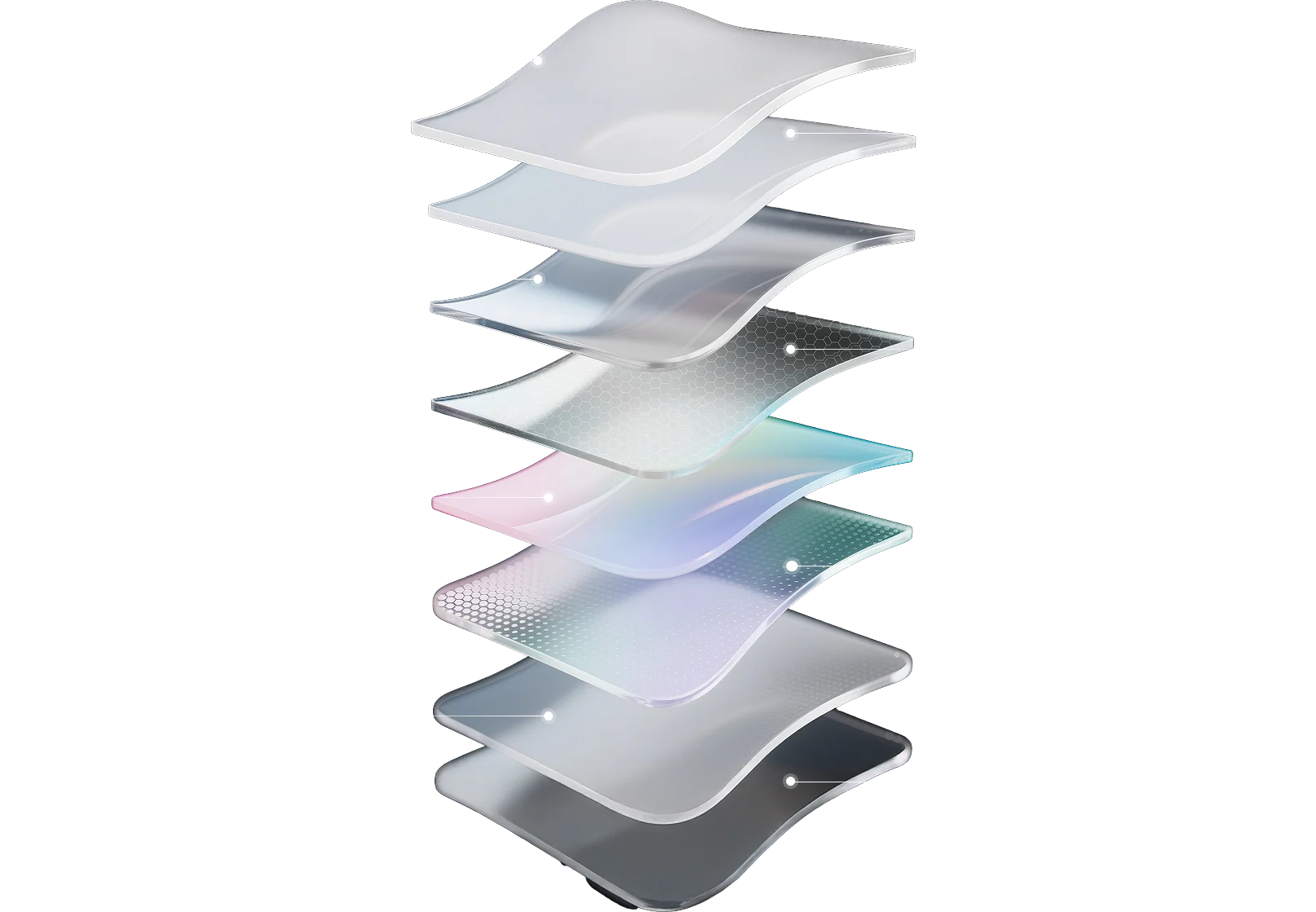
At CONERGIES, our Color PPF uses a multi layer construction with eight functional layers:
• Removable PET Layer
• HOC Top Coating, Hydrophilic
• Aliphatic TPU Film with UV90 Protection
• Grade 8 UV Protection Top Color Layer
• Grade 8 UV Protection Base Color Layer
• Aliphatic TPU Film
• Pressure Sensitive Acrylic Adhesive
• PET Liner
1. Removable PET Layer
The removable PET layer protects the outer surface of the PPF before installation.
It helps protect the film during handling and preparation. This layer is removed before installation, exposing the surface of the PPF.
2. HOC Top Coating, Hydrophilic
The HOC top coating forms the outer surface of the installed film.
This layer uses hydrophilic technology, allowing water to spread more evenly across the surface rather than forming concentrated droplets.
As the outermost functional layer, the top coating also plays an important role in the surface characteristics and appearance of the finished PPF.
3. Aliphatic TPU Film with UV90 Protection
The first Aliphatic TPU layer forms part of the main protective structure of the film.
This layer incorporates UV90 protection and provides the flexible TPU structure required within the PPF construction.
4. Grade 8 UV Protection Top Color Layer
The top color layer provides the visual color of the Color PPF.
It also incorporates Grade 8 UV protection, helping the color layer withstand UV exposure.
5. Grade 8 UV Protection Base Color Layer
Below the top color layer is a second color layer, also incorporating Grade 8 UV protection.
Using two dedicated color layers creates a defined color structure within the film.
Together, the top and base color layers create the final appearance of the Color PPF.
6. Aliphatic TPU Film
A second Aliphatic TPU layer sits below the color structure.
This layer forms another part of the flexible film structure and separates the color system from the adhesive layer.
The use of Aliphatic TPU in multiple parts of the construction allows the film to maintain a structured and flexible multi layer system.
7. Pressure Sensitive Acrylic Adhesive
The pressure sensitive acrylic adhesive is responsible for bonding the PPF to the vehicle surface.
This layer is directly involved in the installation process and allows the film to adhere to the prepared paint surface.
The adhesive is an important part of the overall film construction because it connects the PPF to the vehicle while working together with the layers above it.
8. PET Liner
The PET liner protects the adhesive before installation.
It keeps the adhesive separated from the outside environment during storage and handling.
During installation, the PET liner is removed so the adhesive can contact the vehicle surface.
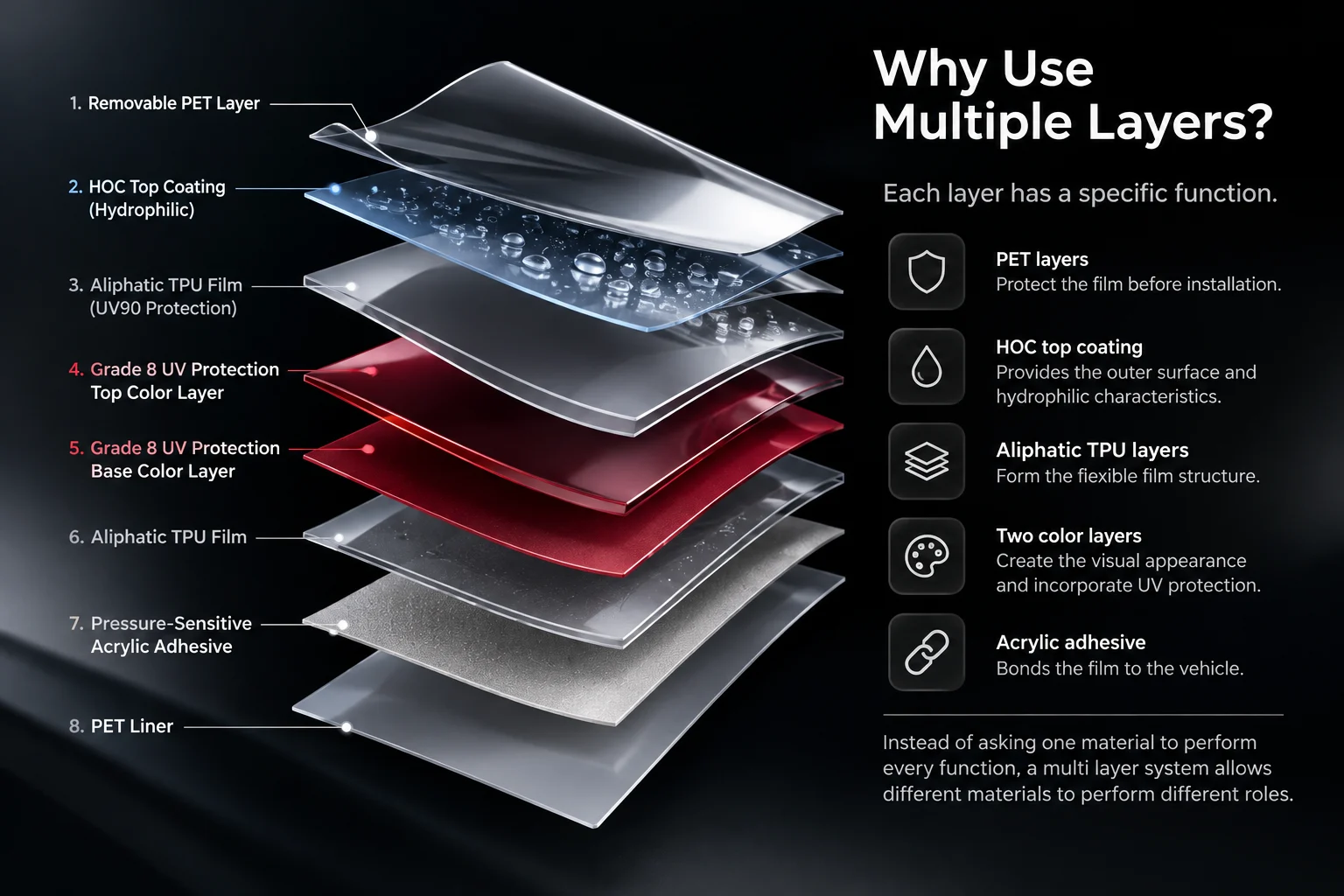
Why Use Multiple Layers?
Each layer has a specific function.
The PET layers protect the film before installation.
The HOC top coating provides the outer surface and hydrophilic characteristics.
The Aliphatic TPU layers form the flexible film structure.
The two color layers create the visual appearance and incorporate UV protection.
The acrylic adhesive bonds the film to the vehicle.
Instead of asking one material to perform every function, a multi layer system allows different materials to perform different roles.
A Complete Film System
The performance of PPF does not come from one layer alone.
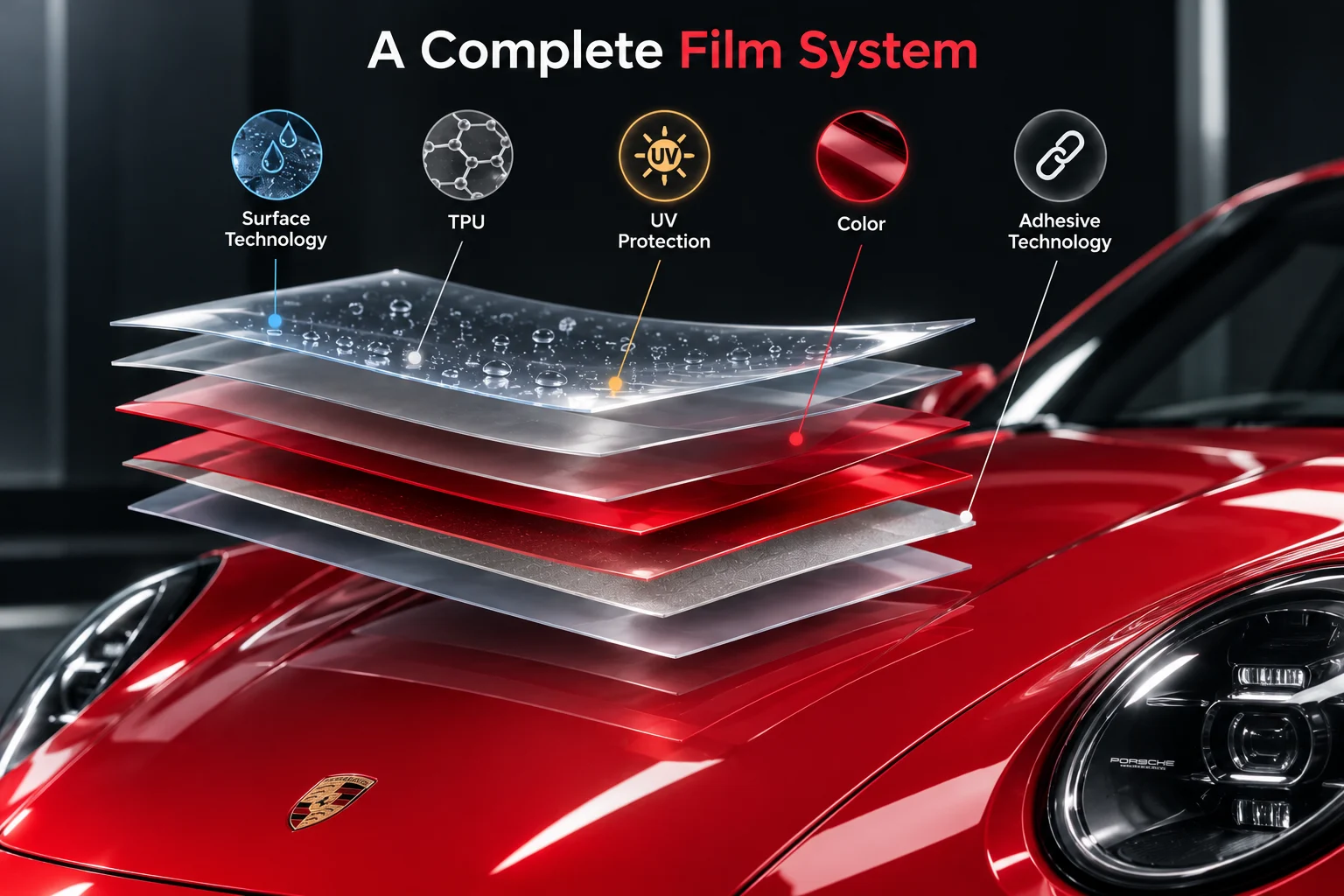
The final product is the result of how the surface coating, TPU, color layers, adhesive, and protective liners are combined into one structure.
This is why understanding the construction of PPF is important when comparing different films.
A multi layer system is not simply about having more layers. It is about giving each layer a specific job and making the complete structure work together.
At CONERGIES, our Color PPF is built around this approach, combining surface technology, TPU, UV protection, color, and adhesive technology into one complete PPF system.