
Paint Protection Film (PPF) helps protect a vehicle’s paint from stone chips, road debris, and everyday surface damage.
After installation, proper PPF maintenance helps keep the film clean and maintain its appearance. Incorrect washing methods or unsuitable cleaning products can damage the surface or cause the edges to lift.
For dealers and installers, clear maintenance instructions help customers understand how to care for their film. The following nine points cover the main areas to explain after installation, from the first wash to ongoing care.
1 Wait Before the First Wash
The film should not be washed immediately after installation. The adhesive needs time to bond to the vehicle, and any moisture remaining from wet installation needs time to dry.
The recommended waiting period depends on the product and installation conditions. Installers should confirm the correct waiting period for the film and include it in the customer’s care instructions.
During this time, customers should avoid pressure washing or disturbing the film edges. Fresh bird droppings should still be removed carefully with water and a clean, soft cloth.
2 Explain What to Expect After Installation
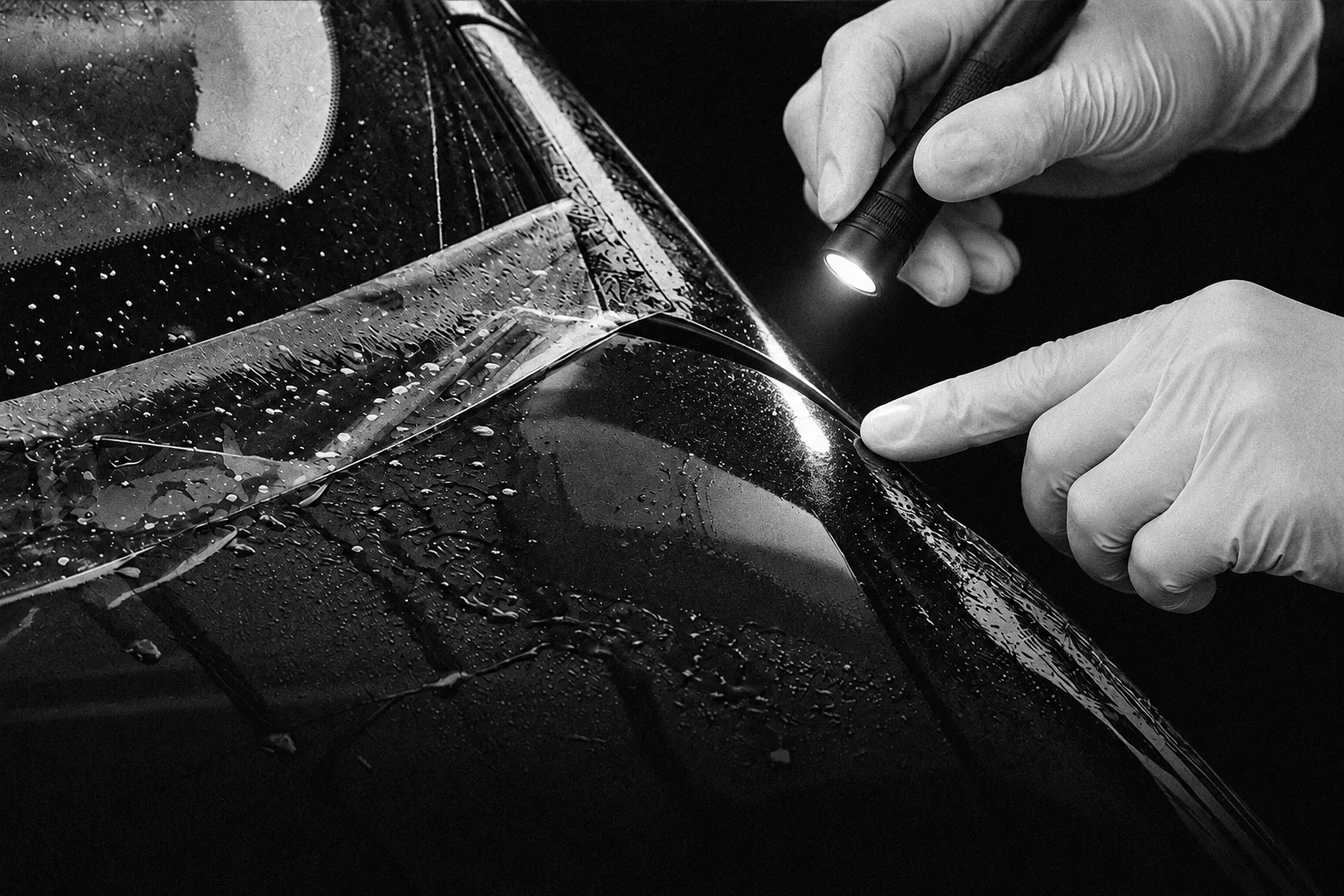
Small areas of trapped moisture may be visible after wet installation. These can gradually disappear as the film dries.
Customers should understand which areas may need time to clear and when to contact the installer. Persistent bubbles, dirt beneath the film, or edges that begin to lift should be checked.
Customers should avoid pulling at the film, puncturing bubbles, or trying to repair loose edges themselves.
3 Use a Gentle Hand Wash
Hand washing is generally the best way to clean a vehicle with PPF. Wash in the shade when the panels are cool, and rinse away loose dirt before touching the surface.
Use a mild, pH-neutral car shampoo suitable for PPF and a clean microfiber wash mitt. Work from the upper panels downward, rinse the mitt regularly, and keep wheel-cleaning tools separate from those used on the bodywork.
Automatic car washes with brushes can scratch the film or catch its edges. Touchless washes avoid brush contact, but their detergents and water pressure still need to be suitable for the film.
4 Take Care Around Film Edges
High-pressure water can lift PPF if it is directed beneath an edge. Seams, corners, and wrapped edges need particular care during washing.
If pressure washing is permitted for the installed film, use a wide spray pattern and follow the recommended pressure, temperature, and distance limits. Avoid directing the spray into film edges or any area where the film has started to lift.
Dirt around an edge should be softened and cleaned gently rather than removed with a stronger water jet.
5 Remove Contamination Promptly
Bird droppings, insect residue, and tree sap should be removed as soon as possible. Leaving them on the surface can increase the risk of staining and make cleaning more difficult.
Soften the affected area with water and a suitable mild shampoo, then clean it gently with a soft microfiber cloth. Rinse and dry the area afterward.
Avoid scraping, aggressive rubbing, or using household solvents. Stubborn contamination should be assessed by the installer and treated with a cleaner confirmed as suitable for the film.
6 Dry the Vehicle After Washing
Water can leave mineral deposits when it dries on the surface. This is particularly noticeable in areas with hard water.
Dry the vehicle with a clean, soft microfiber towel or a suitable air blower. Pay attention to water around mirrors, badges, and trim, which may run onto the film after washing.
Hydrophobic and hydrophilic PPF behave differently when wet. Hydrophobic surfaces encourage water beading, while hydrophilic surfaces allow water to spread more evenly. Both still need regular cleaning and drying. Water spreading across a hydrophilic film is normal and should not be mistaken for a coating problem.
7 Choose Products That Suit the Finish
Gloss, satin, and matte PPF have different surface finishes. Maintenance products should be selected to preserve the appearance of the installed film.
For satin and matte films, including DiamondSatin, avoid abrasive polishing and products designed to add gloss. They can change the finish or create uneven patches.
For gloss PPF, use compatible, non-abrasive products. An additional coating or maintenance spray may make cleaning easier, but it should be suitable for the film and used according to its instructions. Machine polishing should only be considered if the film manufacturer permits it.
8 Check the Film Regularly
Washing and detailing provide an opportunity to check the condition of the film. Look for lifted edges, persistent stains, and damage in areas such as the front bumper, hood, mirrors, and rocker panels.
Self-healing PPF can reduce light scratches and swirl marks in the top coat when exposed to heat. It cannot repair deep cuts, punctures, or damage to the paint beneath the film.
If damage is found, the installer should assess whether the affected film needs attention or replacement. Customers should contact the installer before trying to correct a problem with polish or heat.
9 Provide Clear Care and Warranty Information
Customers should receive written care instructions, information about the installed product, and the installer’s contact details.
Keep the installation date, product name, batch details, covered panels, and installation photos on file. These records help identify the film and may be needed when reviewing a warranty claim.
CONERGIES Warranty and Care provides information about the applicable conditions and claim requirements. Any concern should be reviewed against the warranty for the installed product.
Proper Maintenance Helps Preserve the Finish
A quality film and professional installation are important for PPF performance. Regular washing, suitable cleaning products, and routine checks help keep the film in good condition.
At CONERGIES, we offer clear PPF and Color PPF in a range of surface finishes. Understanding the product and its care requirements helps dealers and installers give customers practical maintenance advice.
PPF Maintenance FAQs
When Can PPF Be Washed After Installation?
Follow the waiting period recommended for the installed film. The installer should confirm when the vehicle can be washed, taking the product and installation conditions into account.
How Often Should a Vehicle With PPF Be Washed?
Wash regularly to prevent dirt from building up. Frequency depends on driving conditions, weather, and storage. Bird droppings, insect residue, and other staining contaminants should be removed promptly.
Can a Pressure Washer Be Used on PPF?
Only if it is permitted by the film’s care instructions. Follow the recommended settings and nozzle distance, and avoid spraying directly into film edges or seams.
Can Satin or Matte PPF Be Polished?
Avoid abrasive polishing and products designed to increase gloss. These can change the satin or matte appearance. Use maintenance products confirmed as suitable for the specific film and finish.
Can Self-Healing PPF Repair Deep Scratches?
No. Self-healing can reduce light surface marks in the top coat, but it cannot repair deep cuts, punctures, or damage to the paint beneath the film.
What Should Customers Do If an Edge Starts Lifting?
Avoid washing or rubbing the affected edge and contact the installer. Do not pull, trim, or glue the film. The installer should assess whether the area can be corrected or needs replacement.
Does PPF Need an Additional Ceramic Coating?
An additional coating is optional. It may make cleaning easier or change water behavior, but it should be compatible with the film and its finish. Regular maintenance is still required.
Contact CONERGIES for PPF maintenance advice and dealer and installer support.