Ceramic coating and paint protection film (PPF) can both improve a vehicle’s appearance and make cleaning easier. CONERGIES PPF also adds a physical barrier against stone chips and road debris. Our gloss clear films enhance the gloss and depth of the original paint, and our films have self-healing top coats that help light surface marks recover with heat.
For dealers and installers, the choice depends on the customer’s priorities. Compare the protection, finish, and surface properties of each product before recommending ceramic coating, PPF, or both.
What Is Ceramic Coating
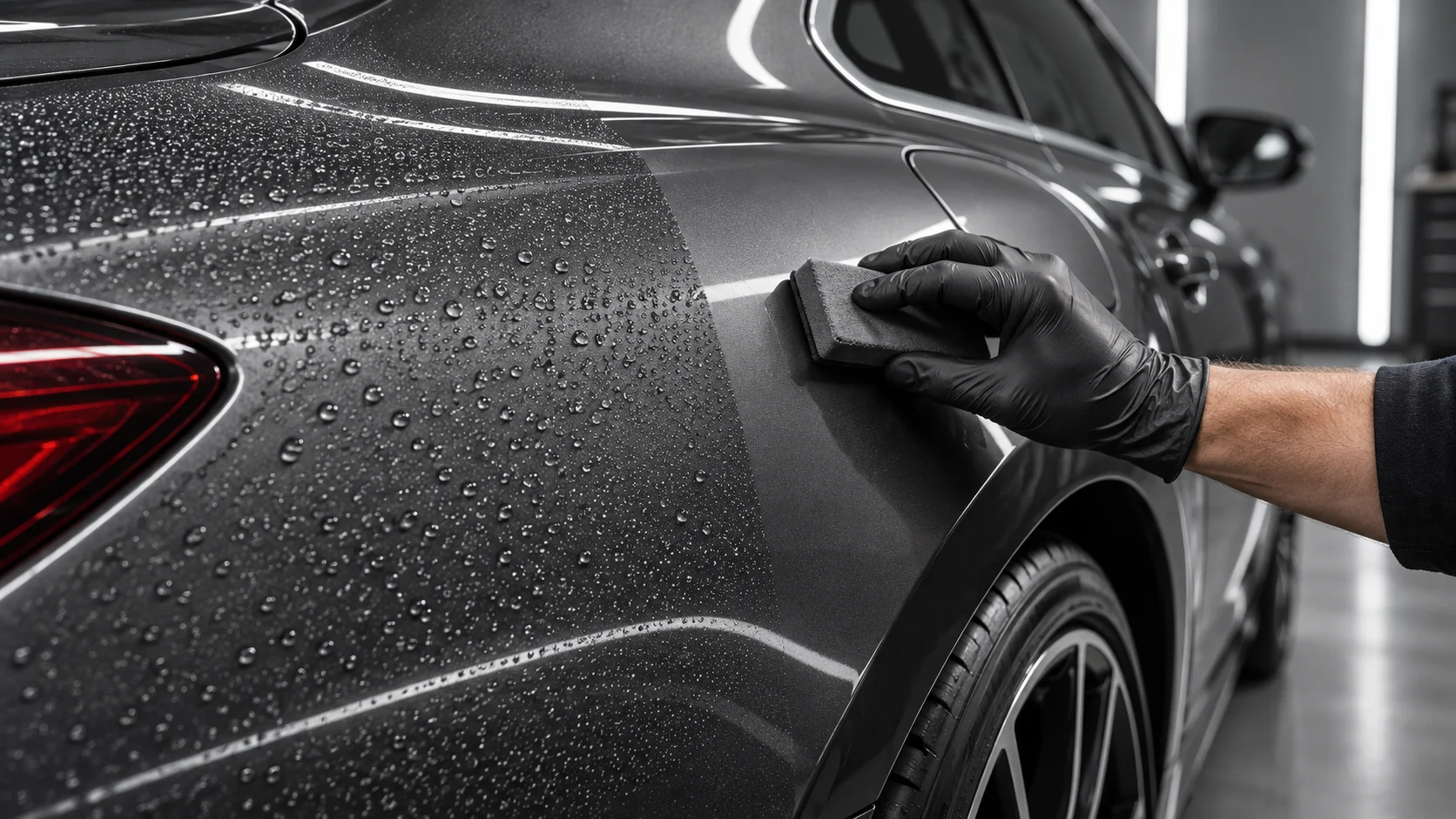
Ceramic coating is a liquid product applied to a prepared surface. After curing, it forms a thin protective layer that can improve gloss and make dirt easier to remove. Many coatings are hydrophobic, meaning they encourage water to bead.
Ceramic coating does not provide the same impact protection as PPF. It should not be recommended as a way to prevent stone chips, and it does not make the paint scratch-proof.
What CONERGIES PPF Offers
Our PPF uses TPU film to protect covered panels from stone chips, light scratches, and everyday road debris. The film’s top coat also affects gloss, surface care, and self-healing.
Our gloss clear PPF enhances the paint’s gloss and visual depth while keeping the original color visible. DiamondSatin gives the original paint a satin finish. Color PPF combines paint protection with a change in color or appearance.
CONERGIES clear PPF and Color PPF have self-healing top coats. Light scratches and swirl marks in the top coat can recover with heat. Self-healing does not repair deep cuts, punctures, or damage to the paint beneath the film.
Ceramic Coating and CONERGIES PPF Compared
Feature
Ceramic coating
CONERGIES PPF
Stone-chip protection
Does not replace the physical protection of film
Helps protect covered panels against stone chips and road debris
Gloss enhancement
Can enhance gloss on suitably prepared gloss paint
Our gloss clear films enhance paint gloss and visual depth
Surface properties
Often hydrophobic; properties depend on the coating
Self-healing top coats with hydrophilic or hydrophobic options
Finish options
Treats the existing finish; select a suitable coating
Gloss and satin clear PPF, plus Color PPF for different colors and finishes
When CONERGIES PPF Is the Better Choice
CONERGIES PPF is the more suitable choice when stone chips and road debris are a concern. It also offers gloss enhancement on our gloss clear films, a choice of finishes, and self-healing of light marks in the film’s top coat.
Coverage can include exposed areas, such as the front bumper, hood, fenders, and mirrors, or extend across the vehicle. Explain which panels are included and whether the hood has partial or full coverage.
PPF cannot prevent every type of damage. A sharp object or strong impact can cut the film or damage the paint underneath. Existing chips should be assessed before installation, since applying film does not repair the paint.
When Ceramic Coating May Be Enough
Ceramic coating may suit a customer who wants a surface treatment for the existing paint and does not need the physical protection of film. It can improve gloss and make washing easier.
Our PPF also offers gloss enhancement and easier maintenance. Consider whether the customer also wants stone-chip protection, self-healing, or a different finish. Inspect the paint before either service and explain any correction or repair needed.
Choosing a CONERGIES Film
In our Diamond Series, DiamondClear and DiamondClear Hydro are 7.5 mil gloss clear films. DiamondClear has a hydrophilic top coat that encourages water to spread across the surface. DiamondClear Hydro has a hydrophobic top coat that encourages water to bead. Both enhance gloss and have self-healing top coats.
DiamondClear Plus and DiamondClear Reserve are thicker gloss clear options at 8.5 mil and 9.5 mil. Both combine added film thickness with gloss enhancement and hydrophilic, self-healing top coats.
DiamondSatin provides a 7.5 mil satin clear finish with a hydrophilic, self-healing top coat. It keeps the original paint color visible while softening the reflections of gloss paint.
For a color change, our Color PPF range combines TPU paint protection with gloss, satin, matte, metallic, and other visual effects. Its hydrophilic, self-healing top coat also supports surface care and recovery from light marks.
Can Ceramic Coating Be Used With CONERGIES PPF
Yes. A compatible coating can be applied over PPF, or used on paint that has not been covered by film. An additional coating is optional. Our films already have top coats that help with cleaning and allow light marks to self-heal. DiamondClear Hydro also has water-beading properties without a separate coating.
Before coating over our PPF, confirm compatibility with CONERGIES, including the effect on the film’s finish, water behavior, and self-healing. Install the film first and follow the film and coating instructions for preparation, application timing, and curing.
How to Compare Costs
Compare the work included in each estimate. A full-vehicle ceramic coating and a front-bumper PPF installation cover different areas and require different preparation and labor.
For CONERGIES PPF, identify the film, finish, thickness, and covered panels. For ceramic coating, state the treated surfaces, coating product, and any paint correction included. If both services are selected, show where each product will be applied.
Installation and Care
Both services depend on proper preparation and application. Clear PPF requires wet installation, while coating work requires careful application and curing. Plan the time and tools needed for the products and coverage selected.
Both PPF and ceramic coating need regular washing and appropriate care. Provide instructions for the installed products, including the surface finish and any added coating. Keep product and installation records, and refer to CONERGIES Warranty and Care for our film warranty terms.
Choosing the Right Protection
CONERGIES PPF combines physical paint protection with self-healing top coats and a choice of finishes. Our gloss clear films also enhance the original paint’s gloss. Choose the film and coverage that suit the customer, and confirm compatibility before adding a ceramic coating.
Contact our team to discuss the clear PPF and Color PPF options that suit your customers and installation needs.
Ceramic Coating vs CONERGIES PPF FAQs
Does CONERGIES Clear PPF Enhance Gloss?
Yes. Our gloss clear films enhance the gloss and visual depth of the original paint. DiamondSatin creates a satin appearance instead, so the finished look depends on the film selected.
Do CONERGIES Films Have Self-Healing Top Coats?
Yes. Our clear PPF and Color PPF have self-healing top coats that allow light scratches and swirl marks to recover with heat. They do not repair deep cuts, punctures, or damage to the paint underneath.
Does Ceramic Coating Prevent Stone Chips?
Ceramic coating does not provide the same physical barrier as PPF. If stone chips are the main concern, we recommend film on the panels that need protection.
Does CONERGIES PPF Need a Ceramic Coating?
No. Our films already have self-healing top coats and surface properties designed to support maintenance. DiamondClear Hydro provides water beading without an additional coating. Any extra coating should be confirmed as compatible with the film.
Can Ceramic Coating Be Applied Over CONERGIES PPF?
Yes, if CONERGIES confirms compatibility with the film and its finish. Check the effect on water behavior and self-healing, then follow the film and coating instructions for application timing and curing.