
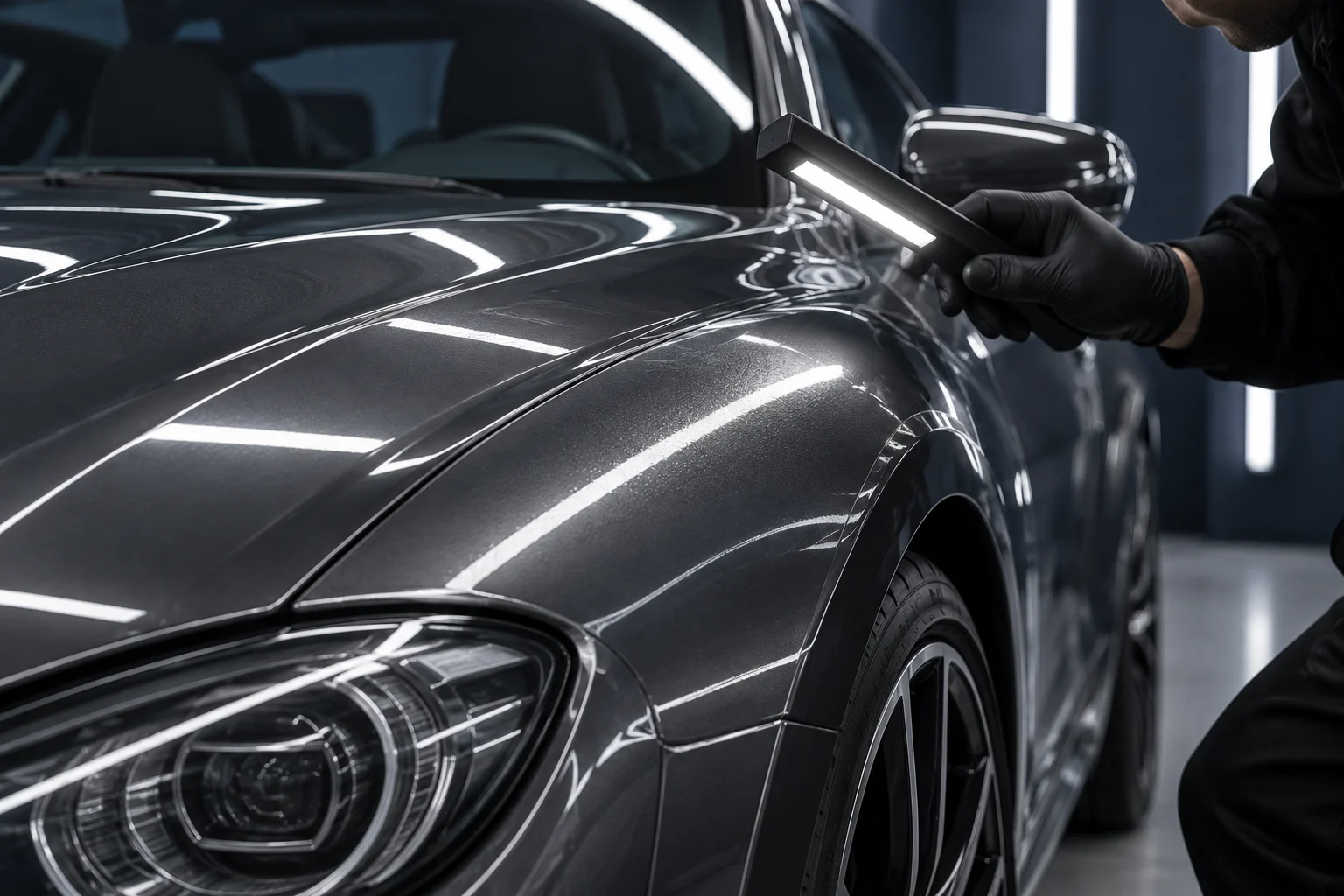
PPF orange peel is a fine, uneven texture that makes reflected light look wavy or slightly pebbled. On a gloss finish, it can reduce the sharpness of reflections even when the surface looks shiny.
The appearance can come from the paint protection film itself or the paint underneath. Installation marks and temporary moisture haze can also affect the finish, but they need a different response. Identifying the source helps dealers and installers choose the right film and address concerns about the finished appearance.
How to Recognize PPF Orange Peel
Inspect a clean panel under a long strip light and look at the reflected edges. Orange peel makes the reflection appear rippled or less clearly defined. Check from several angles and distances, keeping the lighting consistent when comparing panels or samples.
Gloss and reflection clarity are separate characteristics. Two surfaces can have similar gloss readings and still show different amounts of texture. A gloss specification alone cannot tell you how smooth a film will look once installed.
What Causes PPF Orange Peel
PPF can contribute its own surface texture. The top coat, TPU film and adhesive work together as a complete product, so assess the finished appearance on an installed sample. Neither film thickness nor a high gloss figure establishes how sharply the surface will reflect an image.
Some orange peel is common in factory paint. Repainted panels can also have a different texture from adjacent panels. Clear PPF may change the overall appearance, but it does not physically level the clear coat or remove existing paint orange peel. Record visible paint texture before installation so there is a clear reference for the finished job.
Excessive or concentrated stretching can distort the film or adhesive, leaving local marks. Adhesive lines, trapped contamination and cloudy patches can also interrupt reflections. These are different from a film’s regular surface texture. Residual moisture after wet installation may cause temporary haze, while persistent marks need further assessment.
What the Appearance May Indicate
| What you see | Possible source | What to check |
|---|---|---|
| Fine texture across a broad area | Film finish or underlying paint | Compare the bare-paint photos with a correctly installed sample. |
| Waviness visible before installation | Existing paint orange peel | Review the paint finish before deciding on corrective work. |
| Local lines near a curve or stretched area | Film or adhesive distortion | Review the application and assess whether the piece needs replacement. |
| Cloudy patches after wet installation | Residual moisture or another haze issue | Recheck after the recommended drying period and assess persistent haze. |
How to Minimize PPF Orange Peel
Check the uncovered paint under the lighting used for the final inspection. Photograph visible texture and discuss the expected finish with the customer. Any work to reduce paint orange peel should be assessed separately by a paint correction specialist before the film is applied.
Remove dirt, deposits and residues using the product’s preparation instructions. Keep tools and the working area clean to reduce contamination beneath the film. Surface preparation helps prevent bumps and bonding problems, but cleaning does not flatten an uneven clear coat.
Compare samples on equivalent painted surfaces under the same lighting and viewing angles. Include a flat area and a curve where possible. Follow each film’s installation instructions: a loose sheet on its release liner does not show how the finished installation will look.
Plan the film’s position and anchor points before securing it. Distribute the material across the panel instead of forcing a small area to carry excessive tension. Handle repositioning carefully once the adhesive begins to grip. Our guide to high tack and low tack PPF explains how initial grab affects application.
CONERGIES clear PPF requires wet installation. Use the recommended solution and controlled, overlapping squeegee strokes to move installation fluid toward an open edge. Follow the film’s guidance on heat and application conditions. Extra heat or pressure should not be used as a general remedy for an uneven reflection.
CONERGIES Clear PPF and Surface Appearance
DiamondClear and DiamondClear Hydro are 7.5 mil gloss clear films designed for high optical clarity and minimal visible film texture. Both enhance the gloss and depth of the original paint while adding paint protection.
DiamondClear has a hydrophilic top coat that encourages water to spread across the surface. DiamondClear Hydro has a hydrophobic top coat that promotes water beading. Both have self-healing top coats that allow light surface scratches and swirl marks to recover with heat.
Our Gloss Series Color PPF combines a color change with smooth, paint-like reflections and paint protection.
What to Do About Orange Peel After Installation
Start by gently cleaning the surface so residue or water spots do not affect the inspection. Compare the area with the original paint photos and an installed film sample. If residual moisture is responsible for cloudiness, follow the film’s drying guidance and reassess it afterward. Avoid promising that every visible mark will disappear with time.
If the concern comes from the film’s surface finish or permanent installation distortion, the affected piece may need replacement. Additional heat and squeegee pressure are not reliable ways to remove inherent film texture. For a suspected material issue, record the roll or batch number and take clear photos before contacting the supplier.
If the texture comes from the underlying paint, replacing the film alone may leave the same appearance. Assess the paint and agree on any corrective work before removing and reinstalling the PPF.
PPF Orange Peel FAQs
Does Thicker PPF Have More Orange Peel?
Thickness alone does not determine surface texture. Compare the installed appearance of the specific films under the same conditions. A thicker film is not automatically more textured, and a thinner film is not automatically smoother.
Can Self-Healing Remove PPF Orange Peel?
Self-healing helps light scratches and swirl marks in the top coat recover. It should not be expected to remove the film’s inherent texture, repair permanently distorted adhesive or level the paint underneath.
Can a Ceramic Coating Hide PPF Orange Peel?
A compatible ceramic coating can change water behavior and support routine care, but it should not be offered as a correction for visible orange peel. Assess the film finish or underlying paint before adding another surface treatment.
Can Orange Peel Be Polished Out of PPF?
Do not use paint-leveling or abrasive polishing methods to remove film texture. Abrasion can damage the functional top coat. Any permitted polishing must follow the care instructions for that specific film.
Contact the CONERGIES team to discuss clear PPF options for your shop.